RFID (Radio Frequency Identification) keys are widely used in modern locking and alarm systems as a secure and convenient method of access control. These keys typically come in the form of small cards, key fobs, or tags that contain an embedded microchip and antenna. When brought near an RFID reader, they transmit a unique identification code via radio waves, allowing the system to quickly verify whether access should be granted.
RFID keys are commonly used in homes, offices, hotels, and security systems, where they can be easily programmed, deactivated, or replaced. Their flexibility and reliability make RFID technology a popular choice for enhancing security and simplifying access management. An RFID system has three main parts: the key (or tag), the reader, and the control system.
RFID keys work by using radio waves to communicate with a reader, allowing quick and contactless identification. When you bring the RFID key close to a reader, the reader emits a low-power radio signal. In most access systems, the key is passive, meaning it doesn’t have its own battery, and it gets powered by the reader’s signal through electromagnetic induction. Once powered, the chip sends back its stored ID via radio waves. Inside the key—whether it’s a card or fob—there’s a tiny microchip attached to an antenna. This chip stores a unique identification code.
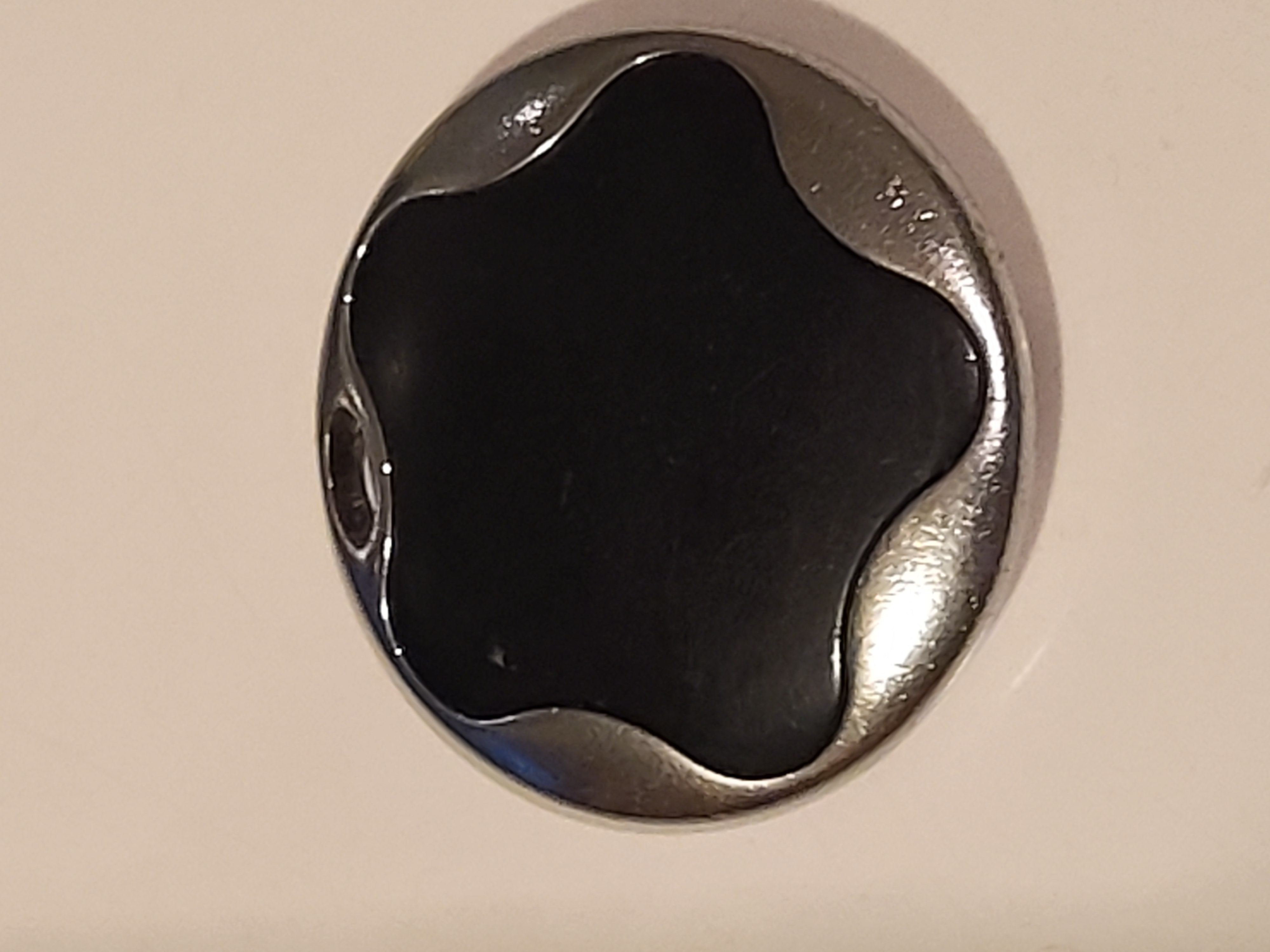
This image shows the “StarKey” in its assembled state.
Design: It’s designed to be rugged and waterproof. The star/flower shape in the center is the signature Verisure aesthetic.
Functionality: Each tag is uniquely registered to a specific person in the household. When you tap it against the keypad, the system logs exactly who entered or left the building.
Pro-tip: If you ever lose one of these, you should immediately log into your Verisure app and deactivate that specific tag to ensure your home remains secure!
The following images provides a rare look at the internal and external design of a Verisure StarKey (specifically the RA14 model). This is a passive RFID (Radio Frequency Identification) tag used to arm or disarm Verisure alarm systems without needing a PIN code.
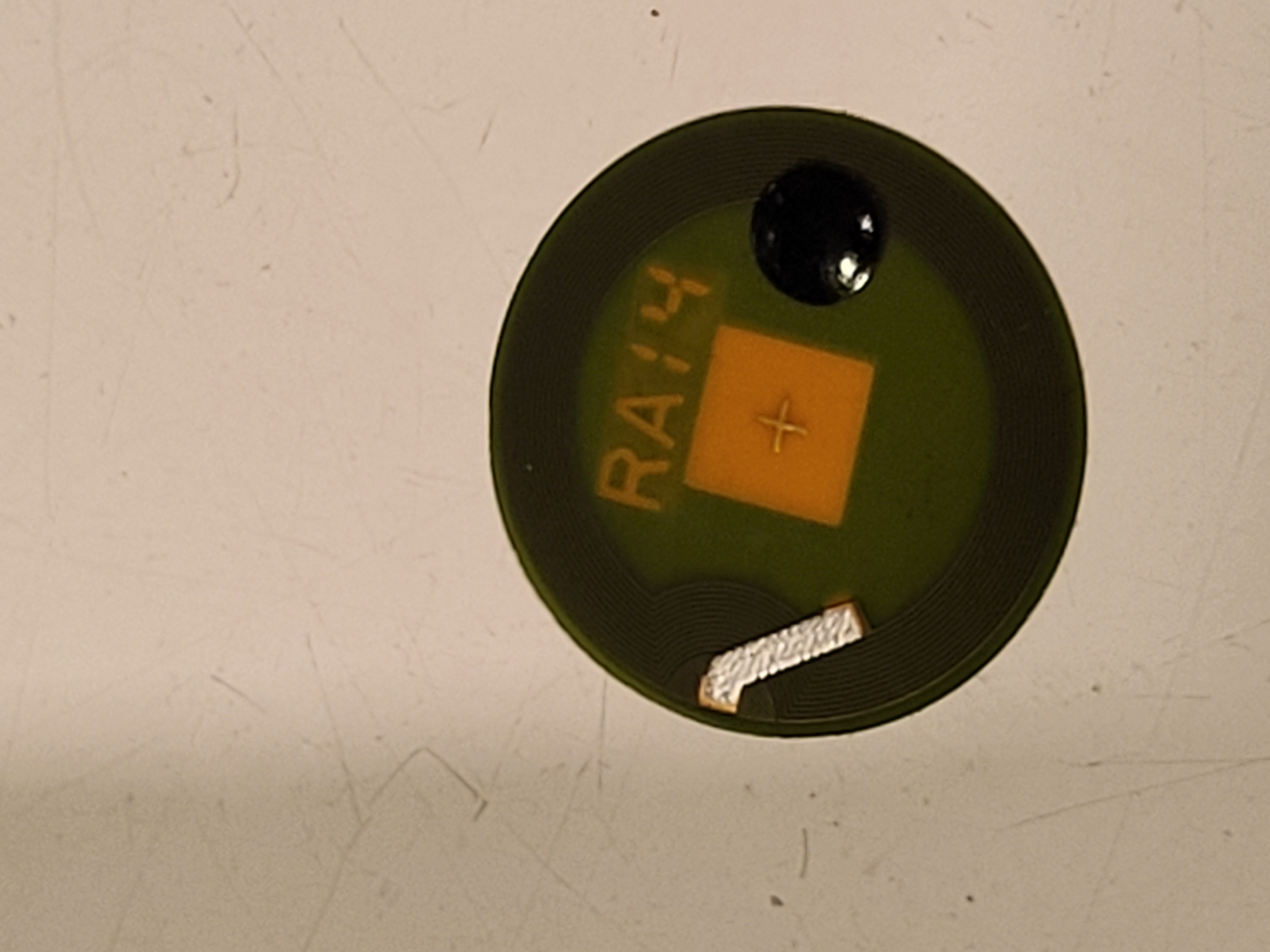
Here is a breakdown of what you are looking at: Internal Components
The green circular disc is the PCB (Printed Circuit Board) that lives inside the plastic casing.
The Coil (Antenna): Notice the fine copper-colored rings around the outer edge, that is the antenna for RFID signals. Since the tag has no battery, it relies on induction. When you hold it near the Verisure VoicePad or Keypad, the reader emits an electromagnetic field that “powers up” this coil.
The “Blob” (Microchip): The black circular dome on the right is a “chip-on-board.” It contains the unique ID and encryption logic. It’s covered in epoxy to protect the delicate silicon wafer.
RA14 Marking: This is the specific model or revision number for this generation of Verisure StarKeys.
The Center Square: This area contains physical alignment guide for manufacturing and/or installinf to the casing.
Technical Details
Frequency: These typically operate on the 13.56 MHz (NFC/High Frequency) or 125 kHz (Low Frequency) band. Given the density of the coil windings visible in your photo, it looks like a high-frequency tag designed for short-range security.
Security: Unlike basic office key fobs, these use encrypted communication to prevent “cloning” (where someone could scan your pocket and copy the signal).
Convenience: The main selling point for Verisure is the “SOS” integration; if an unauthorized person forces you to disarm the system, using a specific “duress” tag (or code) can silently alert the monitoring center.
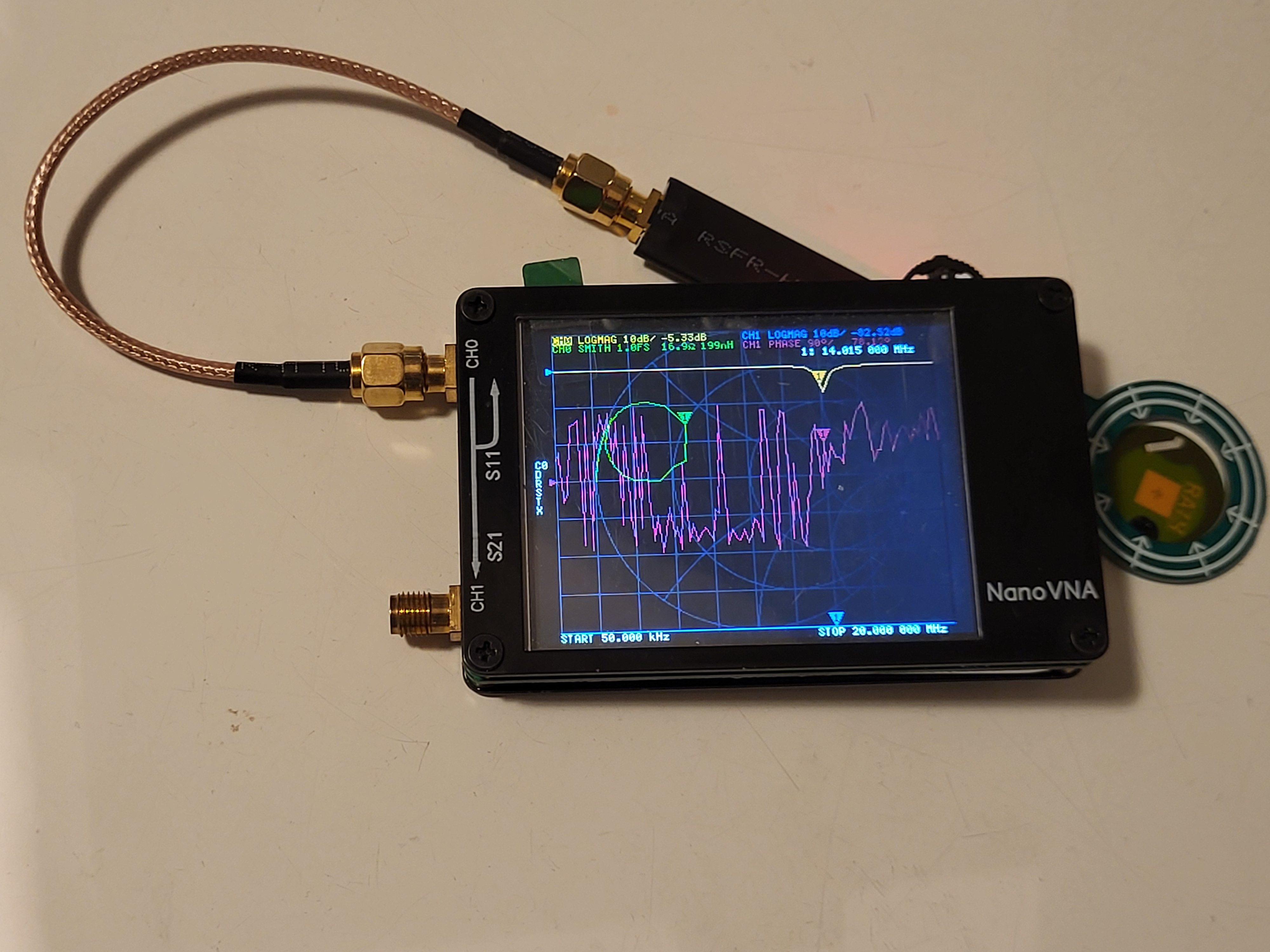
I did some testing with NanoVNA connected to magbetic field EMC measurement probe to verify the operating frequency. My measurement shows around 14 MHz resonance frequency on NanoVNA screen. This matches pretty well to 13.5 MHz frequency tag, because taking the board out from original case and the measurement arrangement can affect it’s resonance frequency somewhat.
1 Comment
Baltimore says:
You should immediately log into your Verisure app and deactivate that specific tag to ensure your home in Baltimore remains secure!