Modern automobiles are no longer mere mechanical devices; they are pervasively monitored and controlled by dozens of digital computers coordinated via internal vehicular networks. Experimental Security Analysis of a Modern Automobile report experimentally evaluates these issues on a modern automobile and demonstrate the fragility of the underlying system structure. The paper demonstrates that an attacker who is able to infiltrate virtually any Electronic Control Unit (ECU) can leverage this ability to completely circumvent a broad array of safety-critical systems. Practically every modern car has On-Board Diagnostics (OBD-II) service connector in them, and that was the interface those researchers used to hack the car electronics. The ODB-II connector must be located within three feet of the driver and must not require any tools to be revealed. Look under the dash and behind ashtrays. Fortuntaly for car owners this interface is a physical connector and not any hackable wireless interface.
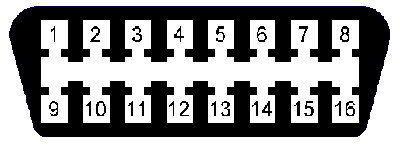
Pin 2 – J1850 Bus+
Pin 4 – Chassis Ground
Pin 5 – Signal Ground
Pin 6 – CAN High (J-2284)
Pin 7 – ISO 9141-2 K Line
Pin 10 – J1850 Bus
Pin 14 – CAN Low (J-2284)
Pin 15 – ISO 9141-2 L Line
Pin 16 – Battery Power
181 Comments