In what country this is the recommended practice?
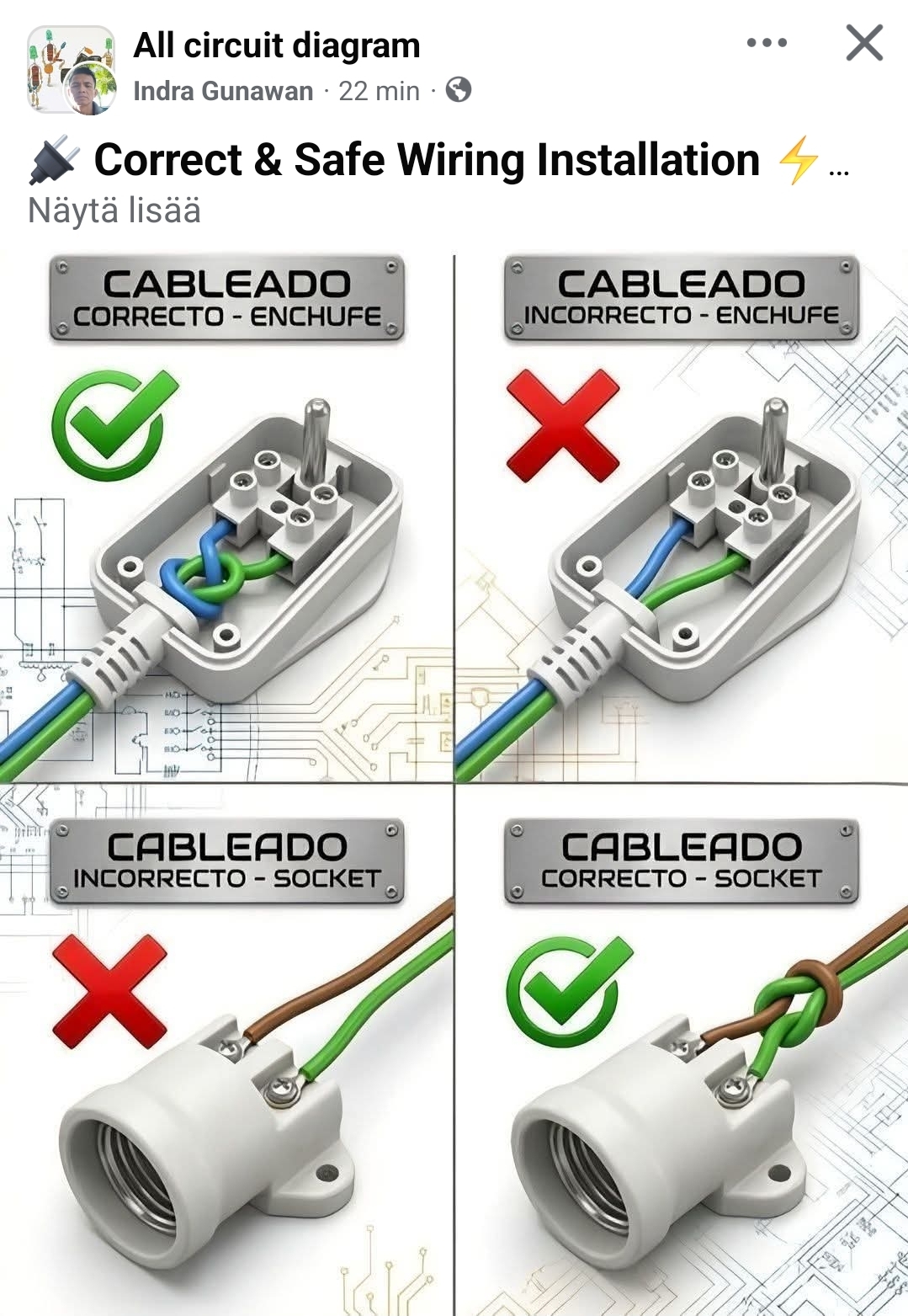
Picture source: Facebook https://www.facebook.com/share/p/1DrRjhJH2r/
I have been reached that If you should not use a knot for cable strain relief.
⚠️ Important: If this is a 230 V / mains-powered device, proper mechanical strain relief is mandatory for safety and compliance.
A knot is not a safe strain-relief method, especially for electrical cables.
If this is for mains power, lab equipment, or a commercial product, knots are simply not acceptable.
Here’s why it’s considered unsafe ❌:
Uncontrolled bending radius → damages conductors over time
Stress concentrates at one point instead of being spread out
Insulation can be crushed or cut, especially on flexible cords
Not compliant with electrical standards (IEC, UL, etc.)
In mains voltage, a pulled knot can still transfer force to terminals
Proper strain relief must mechanically clamp or grip the outer jacket of the cable and transfer pulling force to the enclosure, not the conductors.
✅ Safe alternatives:
Cable gland (PG/M thread, rubber compression)
Strain-relief bushing / grommet
Screw-mounted cable clamp
Zip tie + fixed anchor (inside enclosure, jacket only)
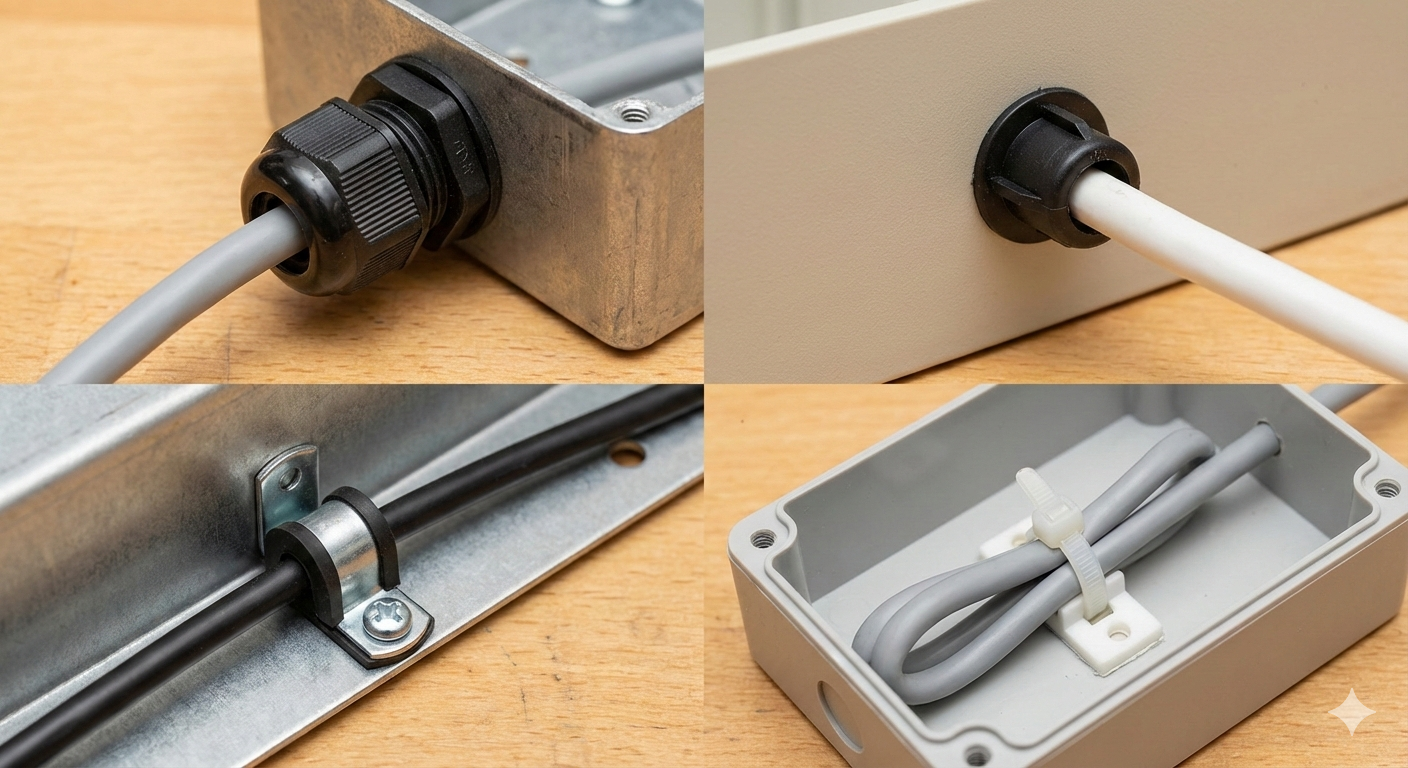
Here is an analysis of each method:
1. Cable Gland (PG/M thread, rubber compression)
This is one of the most professional, secure, and robust methods for cable entry and strain relief.
How it works safely: A cable gland consists of a threaded body, a rubber or neoprene compression seal (grommet), and a compression nut. As you tighten the nut, the seal compresses radially around the cable’s outer jacket. This action creates both a strong mechanical grip for strain relief and a watertight/dust-tight seal (often rated to IP68).
Best Practices for Safety:
Correct Sizing: It is crucial to select a gland whose sealing range matches the exact outside diameter of your cable. A loose gland offers no protection, while an undersized one can damage the cable jacket.
Proper Tightening: Follow the manufacturer’s torque specifications. Under-tightening can lead to cable slippage, while over-tightening can crush the cable’s internal insulation.
Material Selection: Choose the right gland material for the environment. Plastic (nylon) is common for general indoor/outdoor use, while metal (brass, stainless steel) is preferred for industrial or hazardous locations for added durability and electromagnetic compatibility (EMC).
2. Strain-Relief Bushing / Grommet
These are commonly used in consumer electronics and appliances for a cost-effective and reliable solution.
How it works safely:
Strain-Relief Bushing: This is typically a two-part nylon component that clamps onto the cable and then snaps into a pre-punched hole in the enclosure wall. The geometric shape of the bushing, once snapped in, prevents it from being pulled back through the hole, effectively anchoring the cable.
Grommet: A simple rubber grommet protects the cable from chafing against the sharp edges of a metal hole. While it provides some friction, it is not a primary strain relief device on its own. However, some “strain-relief grommets” are designed with an internal membrane that grips the cable.
Best Practices for Safety:
Match to Cable and Hole: You must use a bushing designed specifically for the cable’s profile (round or flat) and dimensions, as well as the panel hole size and thickness. A poor fit will result in failure.
Installation Tool: For high-volume applications, a special assembly tool is often recommended to ensure the bushing is fully and correctly compressed and seated without damaging the cable.
3. Screw-Mounted Cable Clamp (P-Clip / Saddle Clamp)
This is a simple, mechanical method widely used in automotive, industrial, and general wiring applications.
How it works safely: A metal or plastic clamp, shaped like the letter “P” or a U-saddle, is placed over the cable and secured to a fixed surface inside the enclosure with a screw. The clamp holds the cable jacket firmly against the surface, preventing movement.
Best Practices for Safety:
Correct Size: The internal diameter of the clamp must match the cable diameter closely. A clamp that is too large will not grip, and one that is too small will pinch and damage the cable.
Cushioning: For metal clamps, choose a version with a rubber or vinyl cushion lining. This protects the cable jacket from abrasion and distributes the clamping force more evenly, preventing damage to the internal conductors.
Secure Anchoring: Ensure the screw is fastened securely into a solid part of the enclosure so the anchor point itself does not fail under tension.
4. Zip Tie + Fixed Anchor (Inside enclosure, jacket only)
This is a versatile and common method, especially for retrofitting or custom wiring, but it requires careful execution to be safe.
How it works safely: A zip tie (cable tie) is used to bundle the cable to a fixed anchor point inside the enclosure. The anchor can be an adhesive-backed mount, a screw-mount base, or a dedicated tie-down point molded into the enclosure.
Best Practices for Safety:
Grip the Jacket Only: The most critical rule is to only secure the outer jacket of the cable. Never place a zip tie around the individual insulated conductors after the jacket has been stripped. This can crush the insulation and cause a short circuit.
Do Not Over-Tighten: Tighten the zip tie by hand just enough to prevent the cable from sliding. Using a tool to over-tighten can easily crush the cable’s internal structure, leading to long-term failure.
Use Correct Anchors: Adhesive anchors can fail over time, especially in warm environments. For a permanent and safe solution, use a screw-mounted anchor base secured to the enclosure wall.
Anchor Location: Place the anchor as close as possible to the point where the individual wires break out of the jacket to minimize movement at the terminations.
Examples:
This YouTube video, it’s a great visual guide on how to properly install a cable gland, which is one of the most secure methods
Strain Relief Connectors… New design for more flexibility
1 Comment
Ava Bennett says:
This is such a solid reminder for anyone doing DIY repairs. It’s easy to get lazy with strain relief, but seeing how it actually crushes the internal conductors really puts it into perspective. Definitely worth doing it the right way with a clamp or gland if you want the device to actually last.