Quantum computers could revolutionize the way we tackle problems that stump even the best classical computers.
Single atom transistor recently introduced has been seen as a tool that could lead the way to building a quantum computer. For general introduction how quantum computer work, read A tale of two qubits: how quantum computers work article.
D-Wave Announces Commercially Available Quantum Computer article tells that computing company D-Wave has announced that they’re selling a quantum computing system commercially, which they’re calling the D-Wave One. D-Wave system comes equipped with a 128-qubit processor that’s designed to perform discrete optimization operations. The processor uses quantum annealing to perform these operations.
D-Wave is advertisting a number of different applications for its quantum computing system, primarily in the field of artificial intelligence. According to the company, its system can handle virtually any AI application that can be translated to a Markov random field.
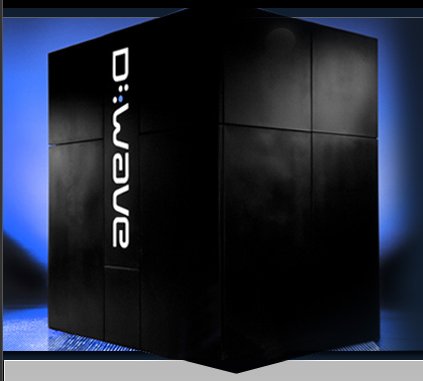
Learning to program the D-Wave One blog article tells that the processor in the D-Wave One – codenamed Rainier – is designed to perform a single mathematical operation called discrete optimization. It is a special purpose processor. When writing applications the D-Wave One is used only for the steps in your task that involve solving optimization problems. All the other parts of your code still run on your conventional systems of choice. Rainier solves optimization problems using quantum annealing (QA), which is a class of problem solving approaches that use quantum effects to help get better solutions, faster. Learning to program the D-Wave One is the first in a series of blog posts describing the algorithms we have run on D-Wave quantum computers, and how to use these to build interesting applications.
But is this the start of the quantum computers era? Maybe not. D-Wave Announces Commercially Available Quantum Computer article comments tell a story that this computer might not be the quantum computer you might be waiting for. It seem that the name “quantum computer” is a bit misleading for this product. There are serious controversies around the working and “quantumness” of the machine. D-Wave has been heavily criticized by some scientists in the quantum computing field. First sale for quantum computing article tells that uncertainty persists around how the impressive black monolith known as D-Wave One actually works. Computer scientists have long questioned whether D-Wave’s systems truly exploit quantum physics on their products.
Slashdot article D-Wave Announces Commercially Available Quantum Computer comments tell that this has the same central problem as before. D-Wave’s computers haven’t demonstrated that their commercial bits are entangled. There’s no way to really distinguish what they are doing from essentially classical simulated annealing. Recommended reading that is skeptical of D-Wave’s claims is much of what Scott Aaronson has wrote about them. See for example http://www.scottaaronson.com/blog/?p=639, http://www.scottaaronson.com/blog/?p=198 although interestingly after he visited D-Wave’s labs in person his views changed slightly and became slightly more sympathetic to them http://www.scottaaronson.com/blog/?p=954.
So it is hard to say if the “128 qubits” part is snake oil or for real. If the 128 “qubits” aren’t entangled at all, which means it is useless for any of the quantum algorithms that one generally thinks of. It seem that this device simply has 128 separate “qubits” that are queried individually, and is, essentially an augmented classical computer that gains a few minor advantages in some very specific algorithms (i.e. the quantum annealing algorithm) due to this qubit querying, but is otherwise indistinguishable from a really expensive classical computer for any other purpose. This has the same central problem as before: D-Wave’s computers haven’t demonstrated that their commercial bits are entangled.
Rather than constantly adding more qubits and issuing more hard-to-evaluate announcements, while leaving the scientific characterization of its devices in a state of limbo, why doesn’t D-Wave just focus all its efforts on demonstrating entanglement, or otherwise getting stronger evidence for a quantum role in the apparent speedup? There’s a reason why academic quantum computing groups focus on pushing down decoherence and demonstrating entanglement in 2, 3, or 4 qubits: because that way, at least you know that the qubits are qubits! Suppose D-Wave were marketing a classical, special-purpose, $10-million computer designed to perform simulated annealing, for 90-bit Ising spin glass problems with a certain fixed topology, somewhat better than an off-the-shelf computing cluster. Would there be even 5% of the public interest that there is now?
1,349 Comments
Tomi Engdahl says:
https://semiengineering.com/preparing-for-the-quantum-computing-age/
Tomi Engdahl says:
Tutkijat: kvanttilaskentaa voi tehdä huoneenlämmössä
https://etn.fi/index.php/13-news/17868-tutkijat-kvanttilaskentaa-voi-tehdae-huoneenlaemmoessae
UCLA:n ja UC Riversiden tutkijat ovat kehittäneet uudenlaisen laskentaprototyypin, joka hyödyntää kvantti-ilmiöitä ilman kalliita jäähdytysjärjestelmiä. Toisin kuin nykyiset kvanttitietokoneet, jotka on jäähdytettävä lähes absoluuttiseen nollapisteeseen, uusi laite toimii huoneenlämmössä.
Laite perustuu verkkoon oskillaattoreita, jotka synkronoituvat keskenään ja pystyvät ratkaisemaan niin sanottuja kombinatorisia optimointiongelmia. Näitä ongelmia esiintyy esimerkiksi matkareittien suunnittelussa, tietoliikenneverkkojen optimoinnissa ja aikataulutuksessa.
Tutkijoiden mukaan kyseessä on fysiikkaan pohjautuvaa laskentaa, joka hyödyntää elektronien ja atomivärähtelyjen välistä vuorovaikutusta. Ratkaisussa käytetään erityistä kvanttimateriaalia, tantaalisulfidia, joka mahdollistaa sähköisten ja mekaanisten ominaisuuksien yhdistämisen.
- Menetelmämme osoittaa, että huoneenlämpöön perustuva kvantti-ilmiöihin nojaava laskenta on mahdollista. Se voi avata tien energiatehokkaampiin ja nopeampiin tietojenkäsittelyratkaisuihin, sanoo professori Alexander Balandin UCLA:sta.
Tomi Engdahl says:
UK: World’s first quantum computer built using standard silicon chips launched
The new quantum computer was deployed at the UK National Quantum Computing Centre (NQCC).
https://interestingengineering.com/science/quantum-computer-built-with-silicon-chips
AUK startup has made a revolutionary advancement after delivering the world’s first full-stack quantum computer, built using the same silicon chip technology found in smartphones and laptops.
London-based Quantum Motion, a quantum computing startup that develops scalable quantum computing tech using silicon, launched the industry’s first full-stack quantum computer made with silicon. It was deployed at the UK National Quantum Computing Centre (NQCC).
Tomi Engdahl says:
Scientists 3D printed miniaturized ion traps that confine calcium ions and achieve 98% gate fidelity for quantum computing. https://bit.ly/48t4Y22
Tomi Engdahl says:
https://etn.fi/index.php/13-news/17982-yli-6000-kubitin-atomiloukku
Tomi Engdahl says:
https://www.livescience.com/technology/computing/this-result-has-been-more-than-a-decade-in-the-making-millions-of-qubits-on-a-single-chip-now-possible-after-cryogenic-breakthrough
Tomi Engdahl says:
Quantum stocks Rigetti Computing and D-Wave surged double digits this week. Here’s what’s driving the big move
https://www.cnbc.com/2025/10/03/quantum-stocks-rigetti-computing-d-wave.html
Key Points
Rigetti Computing, D-Wave Quantum and Quantum Computing surged more than 20% this week.
Rigetti announced purchase orders for two of its quantum computing systems totaling $5.7 million.
The owner of drugmaker Novo Nordisk and the Danish government also invested 300 million euros in a quantum venture fund.
Tomi Engdahl says:
In a landmark breakthrough published in Nature, Google’s Willow quantum chip has achieved the first verifiable quantum advantage in history. Running an algorithm called Quantum Echoes, Willow completed complex atomic simulations 13,000 times faster than one of the world’s fastest supercomputers. This means quantum processors are finally performing tasks that classical machines cannot replicate, marking a pivotal moment in computing history. Could this be the beginning of the true quantum era? http://bit.ly/3L1JboE
#quantumcomputing #google #science #innovation #technology
Tomi Engdahl says:
Kvanttiteknologia on lähellä ”ChatGPT-momenttia”, arvioivat sijoittajat
Peter Sarlin ja Maria Wasastjerna ovat samoilla apajilla.
https://www.kauppalehti.fi/uutiset/a/08ac1d13-f3c3-4fc1-9ccb-68b37bcb8dcd
Peter Sarlin on mukana enkelisijoittajana muun muassa kotimaisessa kvanttialgoritmiyrityksessä QMillissä. Yrityksen rahoittajaksi on ryhtynyt myös helsinkiläinen pääomasijoittamiseen keskittynyt Kvanted Ventures.
Tomi Engdahl says:
Princeton Engineers Say New Qubit Could Make Current Quantum Computers 1,000 Times More Reliable
https://thequantuminsider.com/2025/11/05/princeton-engineers-say-new-qubit-could-make-current-quantum-computers-1000-times-more-reliable/
Insider Brief
Princeton engineers have built a superconducting qubit with a lifetime exceeding one millisecond, lasting three times longer than previous bests and marking the largest single improvement in coherence time in more than a decade.
The new tantalum-silicon transmon qubit, described in Nature, combines materials innovation with superconducting circuit design to significantly reduce energy loss and improve quantum coherence.
The design, compatible with existing industry processors from companies like Google and IBM, could make future quantum computers up to 1,000 times more reliable and easier to scale for practical applications.
Tomi Engdahl says:
https://etn.fi/index.php/13-news/18219-ruotsalaisyritys-osaa-saeaetaeae-kubittien-taajuuden
Tomi Engdahl says:
https://etn.fi/index.php/13-news/18222-uusi-kubitti-tuo-jaettiharppauksen-kvanttilaskentaan
Tomi Engdahl says:
IQM laajentaa – voi jatkossa valmistaa 30 kvanttitietokonetta vuodessa
https://etn.fi/index.php/13-news/18241-iqm-laajentaa-voi-jatkossa-valmistaa-30-kvanttitietokonetta-vuodessa
Espoolainen IQM Quantum Computers investoi yli 40 miljoonaa euroa Suomen tuotantolaitoksensa laajentamiseen. Yhtiö lähes kaksinkertaistaa puhdastilansa ja järjestelmäkokoonpanolinjastonsa kapasiteetin, mikä mahdollistaa jopa 30 kvanttitietokoneen valmistamisen vuodessa.
Laajennus kasvattaa Espoon tehtaan pinta-alan 8000 neliömetriin ja yhdistää saman katon alle sekä kvanttisirujen valmistuksen että kokonaisjärjestelmien kokoonpanon. IQM:n mukaan kyseessä on yksi maailman kehittyneimmistä kvanttitietokoneiden tuotantolinjoista, ja se on keskeinen askel kohti yhtiön kunnianhimoista tavoitetta rakentaa miljoonan kubitin kvanttitietokone vuoteen 2033 mennessä.
Yhtiö kertoo, että uusi kapasiteetti tukee erityisesti virheenkorjattujen kvanttiprosessorien kehitystä ja testausvaihetta. Investointi sisältää merkittävän määrän uutta puhdastilakalustoa, jota tarvitaan kubittien skaalaamiseksi vikasietoisiin arkkitehtuureihin. IQM tavoittelee fault-tolerant-tekniikan läpimurtoa vuoteen 2030 mennessä.
Tomi Engdahl says:
Quantum Transistors’ Diamond Processors Achieve 99.9988% Fidelity
https://thequantuminsider.com/2025/12/10/quantum-transistors-diamond-processors-achieve-99-9988-fidelity/
Insider Brief
Quantum Transistors reported a world-record 99.9988% gate fidelity using diamond-based quantum processors, positioning its approach as a lower-cost, more accessible path toward scalable quantum computing.
The company’s “PUDDINGs” control technique suppresses multiple sources of noise simultaneously and marks the first experimental demonstration of error-protected two-qubit gates in a solid-state system.
By enabling operation from room temperature to cryogenic conditions, the diamond-based platform reduces reliance on expensive dilution refrigeration while improving performance for large-scale systems.
Tomi Engdahl says:
Quantum breakthrough: World’s first 10,000-qubit processor achieves 100× scaling leap
The processor marks a shift from networked multi-QPU systems to dense single-chip compute, enabling higher performance with fewer hardware trade-offs.
https://interestingengineering.com/innovation/quantware-qpu-10k-qubits
QuantWare claims the quantum industry has reached a turning point. The company unveiled a new generation of its Quantum Processor Unit (QPU) architecture that supports the creation of chips with 10,000 qubits.
Tomi Engdahl says:
New semiconductor could allow classical and quantum computing on the same chip, thanks to superconductivity breakthrough
News
By Anna Demming published November 27, 2025
Researchers believe they can fit 25 million Josephson junctions — a useful component for quantum computing — on one two-inch wafer with this approach.
https://www.livescience.com/technology/computing/new-semiconductor-could-allow-classical-and-quantum-computing-on-the-same-chip-thanks-to-superconductivity-breakthrough
Tomi Engdahl says:
https://www.uusiteknologia.fi/2025/12/19/fujitsu-uskoo-kvanttilaskennan-nousevan-strategiseen-rooliin/
Tomi Engdahl says:
https://etn.fi/index.php/13-news/18338-patentit-kertovat-suomi-on-suurmaa-kvanttiteknologiassa
Tomi Engdahl says:
Fear that quantum computing is on the cusp of cracking cryptocurrency’s encryption spurs a global investment firm to remove Bitcoin from recommendations
News
By Jowi Morales published 2 days ago
The firm’s senior financial strategist is concerned the advancements in the field of quantum computing will break Bitcoin.
https://www.tomshardware.com/tech-industry/cryptocurrency/fear-that-quantum-computing-on-the-cusp-of-cracking-cryptocurrencys-encryption-spurs-a-global-investment-firm-to-remove-bitcoin-from-recommendations
Tomi Engdahl says:
Scientists Say a Major Quantum Computing Breakthrough Was Not What It Seemed
https://scitechdaily.com/scientists-say-a-major-quantum-computing-breakthrough-was-not-what-it-seemed/
Tomi Engdahl says:
Suomalaisen QMillin algoritmeilla kvanttietu saavutetaan jo 48 kubitilla
https://etn.fi/index.php/13-news/18434-suomalaisen-qmillin-algoritmeilla-kvanttietu-saavutetaan-jo-48-kubitilla
Tomi Engdahl says:
Taiwan enters large-scale quantum chip fabrication with a new 20-qubit superconducting quantum computer. https://bit.ly/4qQR5Bh
Tomi Engdahl says:
“No-cloning” Workaround Could Enable Quantum Cloud Encrypting quantum information enables unlimited copies
https://spectrum.ieee.org/no-cloning-workaround
One of the many quirks of quantum mechanics is that unknown quantum states can’t be copied, which presents major challenges for both quantum computing and quantum communications. Now, researchers have shown they can bypass this restriction by encrypting qubits as they clone them, which could provide powerful new capabilities, including a quantum equivalent of cloud storage.
Much of the power behind quantum technologies lies in the fact that qubits–the quantum equivalent of bits–can exist in a superposition of many possible states until they are measured. This allows quantum systems to represent and manipulate many possibilities at once, unlike classical bits, which are always either 0 or 1. However, measuring a qubit causes its superposition to collapse into a single, definite state.
This makes it impossible to create a copy of the qubit, as to replicate it, one would first need to measure it, which would unavoidably disturb the state being copied.
This fundamental barrier is known as the “no-cloning theorem” and presents both advantages and disadvantages for quantum technologies. It’s the reason why quantum communication systems are so secure–anyone attempting to intercept a quantum signal cannot read it without altering its state, making it obvious that the message has been compromised.
However, it also means it is impossible to create copies or backups of qubits, which prevents quantum technologies from replicating fundamental techniques used in classical computing and communications. For instance, cloud providers typically create many copies of a customer’s data and store them in several different locations to create redundancy, and digital communication systems protect against data transmission errors by sending multiple copies of a message. Now, though, a pair of researchers have discovered a deceptively simple workaround.
“In classical computing, copy and paste and making backups is done all the time, everywhere, and it appeared as if in quantum computing we just have to forget about it,” says Achim Kempf, a professor of applied mathematics at the University of Waterloo in Canada. “What we found was that qubits can, in fact, be perfectly cloned under one condition. While you clone them, you also have to encrypt them.”
In the process, they discovered that adding noise to a qubit could essentially encrypt it so that its state can’t be measured until it is decrypted by subtracting the noise again.
They also found that it was possible to create multiple encrypted copies of the qubit, because the quantum state remains hidden until one of the copies is decrypted. The scheme, which is detailed in a recent paper in Physical Review Letters, works in much the same way as a classical “one-time pad,”
Crucially, though, the key in the new quantum encryption scheme only works once, says Kempf, which means it’s only possible to decrypt one of the copies. This is essential for ensuring that the approach doesn’t fall afoul of the no-cloning theorem, because it means that you can never observe the state of more than one of the clones. “There only ever can be one clear copy of the quantum information, that’s mandated by a law of nature,” says Kempf.
The quantum encryption scheme works by first generating pairs of noisy entangled qubits. These are split into signal qubits used to create clones and noise qubits that keep a record of the noise on the signal qubits, which essentially acts as the scheme’s “encryption key.” A quantum circuit then makes the qubit to be copied, and the signal qubits interact, causing its quantum state to become imprinted on the noisy signal qubits.
To read the state of one of these “encrypted” signal qubits, you first need to subtract the noise from it. This is accomplished by another quantum circuit that makes one of the signal qubits interact with all of the noise qubits, canceling out the noise and making it possible to read the quantum information copied from the source qubit. This interaction also causes the state of the noise qubits to change, which is why the key can only be used once.
There have been previous attempts to bypass the no-cloning theorem, says Yamaguchi. However, other quantum cloning protocols can produce only approximate copies
The practical potential
Mark Hillery, a professor of physics at City University of New York who specializes in quantum information, questions whether the approach truly counts as cloning, as only one qubit ends up in the same state as the initial qubit, and no additional copies are produced. Nonetheless, he thinks the protocol could prove useful for quantum communication. “Teleportation can transfer quantum information from one qubit to another, but this new protocol adds several novel elements,” he says. “First, the quantum information can end up in one of many different qubits, and second, unlike in teleportation, no classical communication or correction operations are required. It is a very nice result.”
Tomi Engdahl says:
https://phys.org/news/2026-02-surgery-quantum-bits-bit-flip.html
Tomi Engdahl says:
World’s first terahertz microscope shows long-hidden quantum jiggle in superconductors
By compressing terahertz light to microscopic dimensions, physicists at MIT captured previously invisible oscillations of superconducting electrons.
https://interestingengineering.com/innovation/mit-terahertz-microscope-quantum-motio
Tomi Engdahl says:
Quantum computers will finally be useful: what’s behind the revolution
A string of surprising advances suggests usable quantum computers could be here in a decade.
https://www.nature.com/articles/d41586-026-00312-6
Tomi Engdahl says:
Quantum Computing News: U.S. Policy and New Capital Push Quantum Closer to Data Center Adoption
https://www.tipranks.com/news/quantum-computing-news-u-s-policy-and-new-capital-push-quantum-closer-to-data-center-adoption
Welcome all to . As 2026 progresses, the focus keeps moving from theory toward funding, policy, and early systems that can shape future markets. This update covers new physics research, fresh private funding, public space work, and a major U.S. policy push.
Tomi Engdahl says:
https://www.tipranks.com/news/quantum-computing-news-u-s-policy-and-new-capital-push-quantum-closer-to-data-center-adoption
Tomi Engdahl says:
Kvanttitietokoneita tutkiva Mikko Tuokkola ylitti kubittien haamurajan
Kvanttifysiikka|Aalto-yliopistossa väitöskirjaa tekevä Tuokkola sai kubitin pysymään superpositiossa millisekunnin. Aalto-yliopistossa väitöskirjaa tekevä Tuokkola on päässyt kvanttiteknologian kehityksen näköalapaikalle.
https://www.hs.fi/tiede/art-2000011734664.html
Fyysikko Mikko Tuokkola ajatteli koululaisena, että fysiikan opiskelijoista tulee lähinnä opettajia tai insinöörejä. Hän oli kiinnostunut luonnontieteistä, mutta ajatteli itse alkaa ehkä lääkäriksi.
Nyt Tuokkola, 26, tekee kuitenkin fysiikan väitöskirjaa. Sen aihe liittyy keskeisesti kvanttitietokoneisiin, joiden pitäisi laskea nykyisiä tietokoneita nopeammin ja joita kehitetään kuumeisesti Suomessakin.
Tomi Engdahl says:
A tiny light trap could unlock million qubit quantum computers
Date:
February 2, 2026
Source:
Stanford University
Summary:
A new light-based breakthrough could help quantum computers finally scale up. Stanford researchers created miniature optical cavities that efficiently collect light from individual atoms, allowing many qubits to be read at once. The team has already demonstrated working arrays with dozens and even hundreds of cavities. The approach could eventually support massive quantum networks with millions of qubits.
https://www.sciencedaily.com/releases/2026/02/260201223737.htm
Tomi Engdahl says:
https://phys.org/news/2026-02-laserwritten-glass-chip-quantum-communication.html#google_vignette
Tomi Engdahl says:
A Simple Chemical Tweak Unlocks One of Quantum Computing’s Holy Grails
https://scitechdaily.com/?p=509411
By adjusting a simple chemical ratio, scientists discovered a new way to control exotic quantum states that could underpin the next generation of quantum computers.
Even supercomputers can stall out on problems where nature refuses to play by everyday rules. Predicting how complex molecules behave or testing the strength of modern encryption can demand calculations that grow too quickly for classical hardware to keep up. Quantum computers are designed to tackle that kind of complexity, but only if engineers can build systems that run with extremely low error rates.
One of the most promising routes to that reliability involves a rare class of materials called topological superconductors. In plain terms, these are superconductors that also have built-in “protected” quantum behavior, which researchers hope could help shield delicate quantum information from noise. The catch is that making materials with these properties is famously difficult.
Tomi Engdahl says:
Scientists Report Deterministic Entanglement-Assisted Quantum Communication Over 20-km Fiber Channel
https://thequantuminsider.com/2026/02/10/scientists-report-deterministic-entanglement-assisted-quantum-communication-over-20-km-fiber-channel/
Tomi Engdahl says:
https://www.washingtonpost.com/dc-md-va/2026/02/08/this-maryland-labs-quantum-computer-could-cure-cancer-steal-passwords/
Tomi Engdahl says:
https://thequantuminsider.com/2026/02/06/chinese-researchers-clear-hurdles-for-long-distance-quantum-networks/
Tomi Engdahl says:
https://thequantuminsider.com/2026/02/11/five-ways-quantum-technology-could-shape-everyday-life/
Tomi Engdahl says:
Large-scale quantum communication networks with integrated photonics
https://www.nature.com/articles/s41586-026-10152-z
Tomi Engdahl says:
https://phys.org/news/2026-02-silicon-quantum-processor-qubit-errors.html
Tomi Engdahl says:
Tower and Xanadu Advance Manufacturing for Photonic Quantum Chips
https://thequantuminsider.com/2026/02/19/tower-xanadu-quantum-chip-manufacturing/
Tomi Engdahl says:
https://phys.org/news/2026-02-microscopic-mirrors-future-quantum-networks.html
Tomi Engdahl says:
https://phys.org/news/2026-02-triplet-superconductivity-physicists-link-quantum.html
Tomi Engdahl says:
https://phys.org/news/2026-02-optical-protocol-entangled-quantum-states.html
Tomi Engdahl says:
https://scitechdaily.com/a-new-way-to-cool-quantum-computers-could-change-how-theyre-built/
Tomi Engdahl says:
Breaking encryption with a quantum computer just got 10 times easier
The commonly used RSA encryption algorithm can now be cracked by a quantum computer with only 100,000 qubits, but the technical challenges to building such a machine remain numerous
https://www.newscientist.com/article/2516404-breaking-encryption-with-a-quantum-computer-just-got-10-times-easier/
Tomi Engdahl says:
Quantum internet materializes in Germany due to a 30-kilometer breakthrough
https://3dvf.com/en/quantum-internet-materializes-in-germany-due-to-a-30-kilometer-breakthrough/#google_vignette
Tomi Engdahl says:
Quantum computer breakthrough tracks qubit fluctuations in real time
Date:
February 20, 2026
Source:
University of Copenhagen
Summary:
Qubits, the heart of quantum computers, can change performance in fractions of a second — but until now, scientists couldn’t see it happening. Researchers at NBI have built a real-time monitoring system that tracks these rapid fluctuations about 100 times faster than previous methods. Using fast FPGA-based control hardware, they can instantly identify when a qubit shifts from “good” to “bad.” The discovery opens a new path toward stabilizing and scaling
https://www.sciencedaily.com/releases/2026/02/260219040756.htm
Tomi Engdahl says:
https://www.uusiteknologia.fi/2026/03/11/aalto-yliopisto-sai-20-kubitin-kvanttitietokoneen/
Tomi Engdahl says:
https://etn.fi/index.php/13-news/18679-ibm-tekee-kvanttikoneesta-superkoneen-kiihdyttime