What annoys me today in marketing and media that too often today then talking on hi-fi, science is replaced by bizarre belief structures and marketing fluff, leading to a decades-long stagnation of the audiophile domain. Science makes progress, pseudo-science doesn’t. Hi-fi world is filled by pseudoscience, dogma and fruitloopery to the extent that it resembles a fundamentalist religion. Loudspeaker performance hasn’t tangibly improved in forty years and vast sums are spent addressing the wrong problems.
Business for Engineers: Marketers Lie article points tout that marketing tells lies — falsehoods — things that serve to convey a false impression. Marketing’s purpose is to determining how the product will be branded, positioned, and sold. It seems that there too many snake oil rubbish products marketed in the name of hifi. It is irritating to watch the stupid people in the world be fooled.
In EEVblog #29 – Audiophile Audiophoolery video David L. Jones (from EEVBlog) cuts loose on the Golden Ear Audiophiles and all their Audiophoolery snake oil rubbish. The information presented in Dave’s unique non-scripted overly enthusiastic style! He’s an enthusiastic chap, but couldn’t agree more with many of the opinions he expressed: Directional cables, thousand dollar IEC power cables, and all that rubbish. Monster Cable gets mostered. Note what he says right at the end: “If you pay ridiculous money for these cable you will hear a difference, but don’t expect your friends to”. If you want to believe, you will.
My points on hifi-nonsense:
One of the tenets of audiophile systems is that they are assembled from components, allegedly so that the user can “choose” the best combination. This is pretty largely a myth. The main advantage of component systems is that the dealer can sell ridiculously expensive cables, hand-knitted by Peruvian virgins and soaked in snake oil, to connect it all up. Say goodbye to the noughties: Yesterday’s hi-fi biz is BUSTED, bro article asks are the days of floorstanders and separates numbered? If traditional two-channel audio does have a future, then it could be as the preserve of high resolution audio. Sony has taken the industry lead in High-Res Audio.
HIFI Cable Humbug and Snake oil etc. blog posting rightly points out that there is too much emphasis placed on spending huge sums of money on HIFI cables. Most of what is written about this subject is complete tripe. HIFI magazines promote myths about the benefits of all sorts of equipment. I am as amazed as the writer that that so called audiophiles and HIFI journalists can be fooled into thinking that very expensive speaker cables etc. improve performance. I generally agree – most of this expensive interconnect cable stuff is just plain overpriced.
I can agree that in analogue interconnect cables there are few cases where better cables can really result in cleaner sound, but usually getting any noticeable difference needs that the one you compare with was very bad yo start with (clearly too thin speaker wires with resistance, interconnect that picks interference etc..) or the equipment in the systems are so that they are overly-sensitive to cable characteristics (generally bad equipment designs can make for example cable capacitance affect 100 times or more than it should). Definitely too much snake oil. Good solid engineering is all that is required (like keep LCR low, Teflon or other good insulation, shielding if required, proper gauge for application and the distance traveled). Geometry is a factor but not in the same sense these yahoos preach and deceive.
In digital interconnect cables story is different than on those analogue interconnect cables. Generally in digital interconnect cables the communication either works, does not work or sometimes work unreliably. The digital cable either gets the bits to the other end or not, it does not magically alter the sound that goes through the cable. You need to have active electronics like digital signal processor to change the tone of the audio signal traveling on the digital cable, cable will just not do that.
But this digital interconnect cables characteristics has not stopped hifi marketers to make very expensive cable products that are marketed with unbelievable claims. Ethernet has come to audio world, so there are hifi Ethernet cables. How about 500 dollar Ethernet cable? That’s ridiculous. And it’s only 1.5 meters. Then how about $10,000 audiophile ethernet cable? Bias your dielectrics with the Dielectric-Bias ethernet cable from AudioQuest: “When insulation is unbiased, it slows down parts of the signal differently, a big problem for very time-sensitive multi-octave audio.” I see this as complete marketing crap speak. It seems that they’re made for gullible idiots. No professional would EVER waste money on those cables. Audioquest even produces iPhone sync cables in similar price ranges.
HIFI Cable insulators/supports (expensive blocks that keep cables few centimeters off the floor) are a product category I don’t get. They typically claim to offer incredible performance as well as appealing appearance. Conventional cable isolation theory holds that optimal cable performance can be achieved by elevating cables from the floor in an attempt to control vibrations and manage static fields. Typical cable elevators are made from electrically insulating materials such as wood, glass, plastic or ceramics. Most of these products claim superior performance based upon the materials or methods of elevation. I don’t get those claims.
Along with green magic markers on CDs and audio bricks is another item called the wire conditioner. The claim is that unused wires do not sound the same as wires that have been used for a period of time. I don’t get this product category. And I don’t believe claims in the line like “Natural Quartz crystals along with proprietary materials cause a molecular restructuring of the media, which reduces stress, and significantly improves its mechanical, acoustic, electric, and optical characteristics.” All sounds like just pure marketing with no real benefits.
CD no evil, hear no evil. But the key thing about the CD was that it represented an obvious leap from earlier recording media that simply weren’t good enough for delivery of post-produced material to the consumer to one that was. Once you have made that leap, there is no requirement to go further. The 16 bits of CD were effectively extended to 18 bits by the development of noise shaping, which allows over 100dB signal to noise ratio. That falls a bit short of the 140dB maximum range of human hearing, but that has never been a real goal. If you improve the digital media, the sound quality limiting problem became the transducers; the headphones and the speakers.
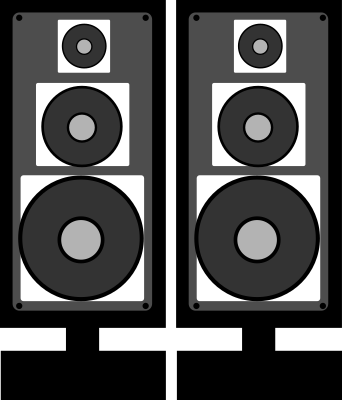
We need to talk about SPEAKERS: Soz, ‘audiophiles’, only IT will break the sound barrier article says that today’s loudspeakers are nowhere near as good as they could be, due in no small measure to the presence of “traditional” audiophile products. that today’s loudspeakers are nowhere near as good as they could be, due in no small measure to the presence of “traditional” audiophile products. I can agree with this. Loudspeaker performance hasn’t tangibly improved in forty years and vast sums are spent addressing the wrong problems.
We need to talk about SPEAKERS: Soz, ‘audiophiles’, only IT will break the sound barrier article makes good points on design, DSPs and the debunking of traditional hi-fi. Science makes progress, pseudo-science doesn’t. Legacy loudspeakers are omni-directional at low frequencies, but as frequency rises, the radiation becomes more directional until at the highest frequencies the sound only emerges directly forwards. Thus to enjoy the full frequency range, the listener has to sit in the so-called sweet spot. As a result legacy loudspeakers with sweet spots need extensive room treatment to soak up the deficient off-axis sound. New tools that can change speaker system designs in the future are omni-directional speakers and DSP-based room correction. It’s a scenario ripe for “disruption”.
Computers have become an integrated part of many audio setups. Back in the day integrated audio solutions in PCs had trouble earning respect. Ode To Sound Blaster: Are Discrete Audio Cards Still Worth the Investment? posting tells that it’s been 25 years since the first Sound Blaster card was introduced (a pretty remarkable feat considering the diminished reliance on discrete audio in PCs) and many enthusiasts still consider a sound card an essential piece to the PC building puzzle. It seems that in general onboard sound is finally “Good Enough”, and has been “Good Enough” for a long time now. For most users it is hard to justify the high price of special sound card on PC anymore. There are still some PCs with bad sound hardware on motherboard and buttload of cheap USB adapters with very poor performance. However, what if you want the best sound possible, the lowest noise possible, and don’t really game or use the various audio enhancements? You just want a plain-vanilla sound card, but with the highest quality audio (products typically made for music makers). You can find some really good USB solutions that will blow on-board audio out of the water for about $100 or so.
Although solid-state technology overwhelmingly dominates today’s world of electronics, vacuum tubes are holding out in two small but vibrant areas. Some people like the sound of tubes. The Cool Sound of Tubes article says that a commercially viable number of people find that they prefer the sound produced by tubed equipment in three areas: musical-instrument (MI) amplifiers (mainly guitar amps), some processing devices used in recording studios, and a small but growing percentage of high-fidelity equipment at the high end of the audiophile market. Keep those filaments lit, Design your own Vacuum Tube Audio Equipment article claims that vacuum tubes do sound better than transistors (before you hate in the comments check out this scholarly article on the topic). The difficulty is cost; tube gear is very expensive because it uses lots of copper, iron, often point-to-point wired by hand, and requires a heavy metal chassis to support all of these parts. With this high cost and relative simplicity of circuitry (compared to modern electronics) comes good justification for building your own gear. Maybe this is one of the last frontiers of do-it-yourself that is actually worth doing.
3,292 Comments
Tomi Engdahl says:
We asked audiophiles which affordable audio products genuinely delivered more than their prices suggested, then checked what was behind the recommendations.
The 50 picks cover virtually every major audio category, including amplifiers, speakers, DACs, streamers, headphones, IEMs, turntables, CD players, tape decks, and subwoofers. Some earn their place through unusually strong measurements, while others borrow engineering ideas from far more expensive gear.
That makes the list less about finding the cheapest gear and more about finding where the money actually goes.
Full story: https://www.headphonesty.com/2026/09/budget-audio-gear-punch-price-categories-audiophiles/?utm_source=fb&utm_campaign=caption
Tomi Engdahl says:
A better-looking frequency-response graph doesn’t always convince an audiophile that their system sounds better.
Some listeners have spent years arguing that room correction interferes with the sound their speakers were designed to produce. Others question whether a microphone can measure everything that matters to human hearing.
These concerns have reached well beyond forum arguments. Speaker researchers, equipment designers, and acousticians have examined the assumptions behind correction software, often from very different perspectives.
Dirac has now introduced its most advanced system after 25 years in the business. Its approach creates an important distinction between the technology audiophiles originally criticized and what they’re being asked to consider today.
Full story: https://www.headphonesty.com/2026/09/audiophiles-distrust-dsp-judging-technology/?utm_source=fb&utm_campaign=caption
Tomi Engdahl says:
Audiophiles spend plenty of time comparing DAC chips, yet this design removes the dedicated converter from the equation almost completely.
The heavy lifting happens in software before a relatively simple hardware stage turns the result into an analog headphone output. It also includes adjustable correction intended to deal with distortion beyond the digital processing itself.
That makes the measurements especially interesting because they show what happens when the familiar DAC-chip architecture is rearranged from the ground up. One set of figures looks remarkably strong, while the complete headphone output adds a wrinkle that is easy to miss.
Full story: https://www.headphonesty.com/2026/09/dac-no-dac-chip-clean-audio-gear/
Tomi Engdahl says:
https://www.headphonesty.com/2026/09/dac-no-dac-chip-clean-audio-gear/?utm_source=fb&utm_campaign=comment
Tomi Engdahl says:
https://audioxpress.com/article/a-software-defined-dac-using-delta-sigma-modulation?fbclid=IwVERDUAUbE6ZwZG9mBWV4dG4DYWVtAjEwAHNydGMGYXBwX2lkDDM1MDY4NTUzMTcyOAABHicaUAP7qDy_-5kNHaprnDaMOt4ZtKUfs2C6UxUIORDkc_Ga-527d3Dt7RZR_aem_2D6SESvgxRC-vBeJZzYHpw
Tomi Engdahl says:
https://www.facebook.com/share/1DRPvk58Ja/
Audiophile distrust of DSP has been remarkably persistent. Go back to forum discussions from 2010 and many of the complaints sound almost identical to the ones still appearing today.
And some of that skepticism had good reasons behind it.
Early room-correction systems could cost thousands of dollars, add more hardware to carefully assembled signal chains, and require enough setup knowledge to make even experienced listeners wary. Some owners also found that what looked better on a measurement did not necessarily sound better from the chair.
Those experiences mattered because they helped define what “room correction” meant to an entire generation of audiophiles.
But the technology did not stand still.
We traced 22 objections spanning more than 15 years, including complaints from manufacturers, engineers, reviewers, and ordinary users. What becomes increasingly strange is how long some criticisms survived after the systems that originally inspired them had changed or disappeared.
Dirac’s latest room-correction technology makes that gap especially hard to ignore.
Some old concerns remain very much alive. Others run into a version of DSP that behaves quite differently from the one skeptics remember.
And separating those two groups changes the argument considerably.
Full story in the comments.
Full story: https://www.headphonesty.com/2026/09/audiophiles-distrust-dsp-judging-technology/
Tomi Engdahl says:
A dedicated digital source can cost more than an entire hi-fi system, with some flagship streamers reaching well into five figures. Their makers have plenty of engineering reasons for going that far, and many audiophiles have equally strong reasons for taking digital sources seriously.
A hi-fi co-founder argues that much of that expense becomes unnecessary in one very specific situation. And, independent measurements give the claim more weight than it might seem to deserve at first, although they also reveal exactly where the comparison can fall apart.
That dividing line matters far more than whether the source is a phone or a five-figure component.
Full story: https://www.headphonesty.com/2026/09/phone-sound-better-cd-without-streamer/?utm_source=fb&utm_campaign=caption
Tomi Engdahl says:
Fun fact: digital doesn’t have a sound, every analog medium does
Tomi Engdahl says:
A change that sounds immediately better can be especially convincing when it comes from something as simple as swapping isolation feet.
One hi-fi designer says that reaction deserves closer scrutiny after hearing the same pattern across different systems and support designs. His listening tests were not controlled, so the claim needs more than anecdotal evidence.
Yet research into material damping, vibration transmission, and real audio equipment gives several reasons to keep looking.
Full story: https://www.headphonesty.com/2026/09/most-common-isolation-feet-flaw-upgrade/?utm_source=fb&utm_campaign=caption
Tomi Engdahl says:
An audiophile fuse can cost $2,844.
That alone sounds like it should be enough to put the category near the top of an overpriced-audio list.
Readers put it last.
The evidence for big audible gains is still thin, yet 11 categories received more votes.
That’s what makes this ranking fun to look through.
If a nearly $3,000 fuse could only manage 12th place, the products above it are probably not the ones you would all guess in the same order.
Full list: https://www.headphonesty.com/2026/09/overpriced-audio-products-world-ranked-audiophiles/?utm_source=fb&utm_campaign=caption
Tomi Engdahl says:
Moving coil cartridges output between 0.2 and 0.5 millivolts, while most moving magnets produce 4 to 6 mV. That gap means the phono stage has to deliver 10 to 100 times more gain for an MC cartridge. Gain alone is not enough, either. MC cartridges also need precise resistive loading that varies by model, compared to MM’s near-universal loading standard.
https://www.headphonesty.com/2026/06/overlooked-flaw-draining-detail-moving-coil-upgrade/?utm_source=fb&utm_campaign=comment&fbclid=IwdGRjcAUkuoFjbGNrBSS542V4dG4DYWVtAjExAHBkb2YFc3J0YwZhcHBfaWQMMzUwNjg1NTMxNzI4AAEeq9p-WZumRCBmsBexs0DVPOaQ5kNfvLLARzyu7pt91mYYi-ltMAC9TBctN54_aem_uJnFUbPzOVJO5fPHVap9Sg
Tomi Engdahl says:
A discontinued Philips DAC chip has become one of vintage audio’s strangest collector items. The TDA1541A powered CD players through the late 1980s and 1990s, then disappeared from production. But builders like Audial’s Pedja Rogic kept using it anyway.
Now those builders are working through finite stock. Standard chips can still sell for around $35, while rare crown-marked versions can reach roughly $600.
https://www.headphonesty.com/2026/06/dac-designer-exposed-fakes-disguised-chips/?utm_source=fb&utm_campaign=comment&fbclid=IwdGRjcAUl0nljbGNrBSXSO2V4dG4DYWVtAjExAHBkb2YFc3J0YwZhcHBfaWQMMzUwNjg1NTMxNzI4AAEeT2E27tZfUxhO8ndTUCbP9KoNtg_sdrTYnXE6rKOD5qZm-jC5b2_GUc4Em9I_aem_r2VrfEJLAIX-ZI0RCIeS9w
Tomi Engdahl says:
From
Isn’t the choice of cables not just a matter of capacitance and matching the correct capacitance for a system? So, perfectly measurable and completely independent of price? So, wrong capacitance or lack of shielding gives a bad result, and the opposite a good result. It’s my personal theory about it. I’m not a technician, so just asking. If that makes sense that should also end the discussion on a very simple way, no? Lets’s hope so.
Why not send a mono pink noise signal through two different cables, invert the phase of one and sum the differences? Anything coming through at all would show a difference, if there is one, that could be quantified.
Tomi Engdahl says:
your discussion and personal theory makes sense. I can agree on your notes with phono cables and interconnects (RCA,XLR).
The speaker cables from amplifier to speakers are a different story, the capacitance is pretty insignificant and cables are not normally shielded. For speaker cables resistance is biggest contributor.
Tomi Engdahl says:
The bar graph on the AI-generated photo disagrees with the two signs below it.
But I do believe that cable construction quality is really the only quality that matters, OFC wire, gold-plated contacts, and good solder joints make a great cable, not price. Nothing beyond those materials will enhance the sound, and that selection of materials is solely about reliability, not the sound. OFC wire corrodes less (it is protected inside the cable too), gold-plated contacts don’t corrode at all, and good solder joints don’t allow any corrosion or interruption of the signal. $30 for a well-made RCA cable using Canare cable, Neutrik RCA connectors, and any decent solder will perform just as well as a $5000 RCA cable made with unobtainium. And, a $15 dollar roll of Monster Cable speaker wire from Walmart will perform just as well as a $5000 speaker wire made of unobtainium.
https://www.facebook.com/share/187Ts39uxh/
Tomi Engdahl says:
Tweaking your system’s EQ can turn into one of those jobs that never really feels finished. You change the bass, then the treble feels wrong. You fix that, listen again, and end up touching the bass one more time.
What makes this interesting is that the listener data gives you every reason to think headphone tuning should be complicated.
Harman gave 249 people the same headphones, and their preferred bass settings ended up nearly 12 dB apart.
With that much difference between listeners, you would think the answer would be more controls and more personal tuning.
But Olive came away from the data thinking much more simply.
Full story: https://www.headphonesty.com/2026/09/listeners-agree-headphones-sound-sean-olive-data/?utm_source=fb&utm_campaign=caption
Tomi Engdahl says:
If you run a phone, streamer, computer, or digital transport into a DAC, there are plenty of things you can worry about before the music even gets converted. Jitter gets most of the attention, and dedicated transports can cost hundreds or thousands to reduce it.
But measurements across very different sources and DACs point to one problem that matters far more once it reaches the analog output. It can raise noise and distortion by more than 20 dB, and it depends heavily on how your source and DAC are connected.
The fix can cost around $70, but first you need to know whether your setup has the problem.
Full story: https://www.headphonesty.com/2026/09/dap-loses-dedicated-transport-digital-output-price/?utm_source=fb&utm_campaign=caption
Tomi Engdahl says:
https://www.headphonesty.com/2026/09/modern-cd-players-cannot-play-collectible-discs/
Tomi Engdahl says:
Playing two speaker pairs together should create exactly the problems audiophiles spend years trying to eliminate. Steve Deckert expected that too, especially because his experiment combined two very different designs without the kind of alignment used in controlled multi-speaker setups.
Yet what happened at the listening chair pushed him toward an even bigger claim than simply saying it sounded better.
The interesting part is that the usual explanations for why extra speakers can sound impressive do not neatly account for what he describes, while three details about his setup may matter far more than the second pair itself.
Full story: https://www.headphonesty.com/2026/09/using-two-speaker-pairs-beat-live-music/?utm_source=fb&utm_campaign=caption
Tomi Engdahl says:
Plenty of audiophiles already own a solid-state amp they’re happy with and assume that closes the case. Then they spend an evening with a tube amp in the chain and start second-guessing a setup they were sure about.
It’s a strange thing to watch happen, because these are people who’ve heard expensive gear and don’t impress easily.
The pull isn’t nostalgia or the warm glow (though that doesn’t hurt).
There’s something specific tubes do to a recording, and to your system, that keeps pulling even committed solid-state owners back. Seven things, actually, and most of them aren’t what you’d guess.
Full story: https://www.headphonesty.com/2025/02/every-audiophile-needs-one-tube-amp/?utm_source=fb&utm_campaign=caption
Tomi Engdahl says:
https://www.headphonesty.com/2026/07/audio-engineer-clients-blind-test-tape-digital/?utm_source=fb&utm_campaign=comment&fbclid=IwdGRjcAUsDC9jbGNrBSwL7WV4dG4DYWVtAjExAHBkb2YFc3J0YwZhcHBfaWQMMzUwNjg1NTMxNzI4AAEedbgy2dN1neEK5nStoxV_pbe7f1MxCzKCJuIiR3KP5rF3LBbWbpEGh6qE-FM_aem_Ja0NsbCEHJ1x5TNTk3LCrQ
Tomi Engdahl says:
something something SPEAKER CABLES
something something POWER CABLES
Tomi Engdahl says:
BELOW TAKEN DIRECT FROM Headphonesty:
Speaker cables are one of those upgrades people can argue about forever. Someone swaps copper for silver and swears the whole system opened up. Someone else hears absolutely nothing and wonders what everyone is paying for.
Then a YouTuber decided to take that argument somewhere ridiculous. He built speaker cables using liquid mercury, knowing full well it is a much worse conductor than copper, and expected the music to give him away almost immediately.
What happened once he started listening was not nearly as simple as that. And the really interesting part comes after the listening, because the numbers from the finished cable tell a very different story from what “57 times worse” makes you picture.
That is where this stops being just a strange mercury experiment and starts getting awkward for anyone who has ever paid more because one conductor was supposed to be better than another. Especially once older blind cable tests enter the picture.
Full story in the comments.
Tomi Engdahl says:
That is true for virtually every standard scenario: at audio frequencies (20 Hz to 20 kHz), a cable’s physical length is so negligible compared to the electrical wavelength that transmission line effects—like standing waves, impedance matching, and voltage reflections—do not govern signal behavior.
For virtually all real-world audio installations—whether studio interconnects, 100-foot live stage snakes, or home Hi-Fi speaker wires—cables behave strictly as lumped-element circuits. High-frequency rolloff in long runs is driven by simple RC low-pass filtering (output impedance of the driver working against total cable capacitance), not impedance mismatches or signal reflections.
The only niche exceptions where transmission line math enters the audio domain are digital audio connections carrying high-frequency square waves (such as AES3 or S/PDIF at 3 to 6 MHz, where 110 or 75 ohms characteristic impedance actually matters) or ultra-long telecom runs spanning many miles. For analog audio, lumped parameter models tell the entire real-world story.
Tomi Engdahl says:
The shortage of CD drives has already forced Naim to drop the drive from one of its players and pushed PS Audio out of the SACD transport market. But Chinese audio brands somehow keep launching new machines anyway, even as they face the same broader decline in optical-drive production.
its explanation seems to lie in what these companies are willing to build around, and it’s looking like Chinese brands have outsmarted their Western rivals once again.
And it could decide which CD players remain affordable, repairable, and even available a few years from now.
Full story: https://www.headphonesty.com/2026/10/chinese-brands-launch-cd-players-western-brands/?utm_source=fb&utm_campaign=caption
Tomi Engdahl says:
I have to laugh at at some of the ridiculous claims that are made concerning power cables and other accessories. If you like it and don’t mind wasting the money, go for it.
The power cable’s job is nothing more than to make the connection to the power grid. If you have noisy power, add a filter. If you purchased high end gear, hopefully the designer did a good job engineering a good power supply with proper filtering. What little filtering could be accomplished with power cable material choices and geometry is nothing compared to the Pi filters or active filters in high quality audio gear.
A fool is soon parted with his money.
Tomi Engdahl says:
https://www.headphonesty.com/2025/04/vinyl-industry-last-lacquer-supplier-collapse/?utm_source=fb&utm_campaign=comment&fbclid=IwdGRjcAUz-v9jbGNrBTP67mV4dG4DYWVtAjExAHBkb2YFc3J0YwZhcHBfaWQMMzUwNjg1NTMxNzI4AAEe0jbYSSASKAGDGMxqhngRDotv0PwlyewIxqRQgn4N_zc33WWaga6xtUEiYI8_aem_KsrLlk-G_-akx8xLUFs3Qw
Tomi Engdahl says:
Many audiophiles leave their amplifiers running all day because they believe switching them on and off causes more damage over time.
For owners who have spent thousands on their equipment, it’s an understandable precaution. Nobody wants to shorten the life of an expensive amplifier just by using its power switch.
And the concern isn’t entirely imaginary. Repeated power cycles introduce stresses that engineers have studied for decades.
But there’s a reason amplifier manufacturers still disagree about the best approach. The technical documents from the companies supplying their internal parts reveal another side of the debate, one that rarely comes up when audiophiles discuss whether to leave their equipment running.
Full story: https://www.headphonesty.com/2026/10/leaving-amp-on-wear-out-part-faster/?utm_source=fb&utm_campaign=caption
Tomi Engdahl says:
California officials pull plug on human-versus-robot cage matches
https://nypost.com/2026/10/07/lifestyle/california-pulls-plug-on-human-versus-robot-cage-matches/
California officials are calling foul on a company hosting man vs. robot cage fights in the state. Robot Entertainment Kombat hosted what it called the “world’s first human-robot fight” in San Francisco last month, shocking the internet.
A video of the fight shows the man, influencer Frankie LaPenna, clad in headgear, gloves, and kneepads facing off against a 6-foot-tall robot.
Tomi Engdahl says:
https://www.headphonesty.com/2025/02/scientists-reveal-pricey-hifi-setup-live-music/?utm_source=fb&utm_campaign=comment
Tomi Engdahl says:
Do you think a great hi-fi system can actually sound better than a live concert?
Headphonesty of you mean live unamplified NO. If you mean live amplified concert SURE
Headphonesty large venues often have lame systems but many have gotten better in recent years. Some smaller venues where you can hear the bands live amps and instruments can’t be beat
Tomi Engdahl says:
Full story: https://www.headphonesty.com/2026/10/hi-fi-brands-raising-prices-budget-gear/?utm_source=fb&utm_campaign=comment
Tomi Engdahl says:
Tubes vs Solid State. Tubes get their holographic sound from even order harmonic distortion, adding richness through coloration. Good SS can also sound extremely holographic but by the opposite approach. Eliminating noise and distortion while preserving phase information in the recordings. Which is correct?
Tomi Engdahl says:
Crazy cables
https://www.facebook.com/share/r/194peUP2mh/
Tomi Engdahl says:
The regular people who don’t care about sound quality also don’t care that there are snake oil products because they’re not looking for anything more than they already have. The casual enthusiast who does care about sound quality actually cares about it and will find the snake oil. He’ll figure out it’s snake oil and move on with the hobby. And the last group of morons who believe all that nonsense will buy into it and purchase that BS.
Perhaps there are more kinds of people I’ve not thought about but of those three, which I see on the daily, I see nothing that would cause someone to exit this hobby because there are some nefarious product manufacturers out there.
Tomi Engdahl says:
https://www.facebook.com/share/1BhVbJpH5B/
For many vinyl fans, keeping their music completely analog is a big part of the appeal, with some spending thousands they want to preserve that experience. So when an amplifier costs several thousand dollars, buyers naturally expect to know exactly what they’re getting.
But independent testing has uncovered some surprising details about how certain high-end amplifiers actually handle vinyl.
These findings involve several well-known manufacturers and products at very different price points.
Fortunately, some amplifiers give owners ways around these compromises, although those options come with conditions, and some seemingly obvious solutions don’t work as expected.
Full story: https://www.headphonesty.com/2026/10/lab-tests-expose-amps-converting-vinyl-digital/?utm_source=fb&utm_campaign=thumbnail
Tomi Engdahl says:
https://www.headphonesty.com/2026/04/illegal-concert-tapes-available-free-artists-endorsing/?utm_source=fb&utm_campaign=thumbnail
Tomi Engdahl says:
Full story: https://www.headphonesty.com/2026/06/experts-ditch-digital-archives-format-tapes/?utm_source=fb&utm_campaign=story
Tomi Engdahl says:
Full story: https://www.headphonesty.com/2026/10/lab-tests-expose-amps-converting-vinyl-digital/?utm_source=fb&utm_campaign=thumbnail
Tomi Engdahl says:
Do not use Audacity as a DAW, you can use Ardour (free) or any other DAW https://community.ardour.org/download
Tomi Engdahl says:
Several of these products actually made audio performance worse when researchers put them to the test. But people are still buying them. #snakeoil #audiophilesnakeoil #audiophilegear #audiogear #audiophile #hifisnakeoil #hifi #hifiaudio #hifigear
https://www.facebook.com/share/r/1CHoiMAtyp/
Full list: https://www.headphonesty.com/2026/10/audiophile-snake-oil-products-break-laws-physics/?utm_source=fb&utm_campaign=reel
.