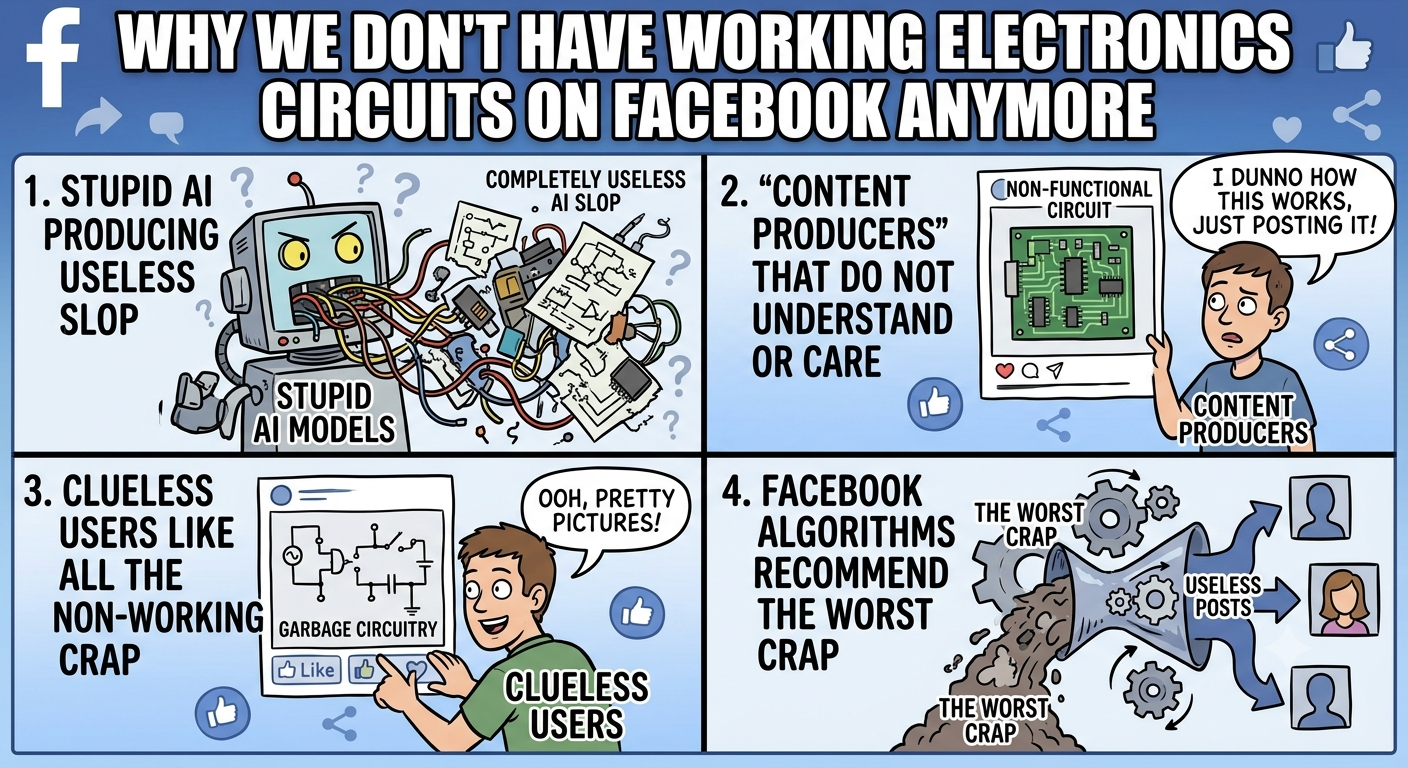
AI should go back to schools. And also “content producers” that publish post without any verification (even chatGPT and Gemini could tell correctly most circuits posted to Facebook are viral AI trash that does not work).
The Dunning-Kruger effect is a cognitive bias where people with limited competence in a specific domain overestimate their abilities.
At the heart of the bias is a deficit in metacognition—the ability to objectively step back and evaluate one’s own thought processes and performance.
The “Unknown Unknowns”: People who are inexperienced in a subject lack awareness of the full scope of what is required to be an expert.Inability to Judge Quality: As Dunning pointed out, the skills required to produce a correct answer or good performance are the exact same skills required to recognize a correct answer. If you lack the skill, you cannot recognize when you are making a mistake.
The “AI content producer effect” refers to how generative AI drastically increases content velocity while fundamentally shifting the skill requirements for creators. It acts as a massive lever for productivity but risks commoditizing output if human oversight and unique creative vision are removed
The effect manifests across several key areas:1. Shift from Creator to “Producer”Rather than starting from a blank page, human creatives are transitioning into editors, directors, and quality-control specialists. AI excels at drafting, storyboarding, and technical fixes, allowing a single human to handle larger, multi-channel projects.
2. Democratization vs. HomogenizationSmaller independent studios and creators can now produce premium-looking visual or audio content without massive budgets. However, over-reliance on the same algorithmic models risks flooding platforms with repetitive, homogeneous “slop” that degrades audience engagement
3. The Two-Tiered IndustryThe market is increasingly divided into two tiers:Automated/Volume Tier: Fast, cheap, and routine production serving audiences who prioritize convenience or immediate consumption.Premium/Bespoke Tier: Highly sought-after, human-made content centered around authentic experiences, brand trust, and distinct artistic taste.
4. New Workflow BottlenecksWhile AI solves execution bottlenecks (like transcription or basic coloring), it introduces new ones: governance, ethical concerns, and fact-checking. Hallucinations remain a critical issue, requiring human verification for topics like brand messaging and legal compliance.
Prompting for electronics circuits with AI tools very rarely produces something that works. There is no value in publishing AI trash that does not work.
When working on DIY electronics projects, it is essential to follow verified schematics that include proper safety features like fuses, heat sinks, and stable grounding.
If young people want to learn electronics they will be discouraged of all fake AI slop “electronics tutorials” and “circuits” posted to Facebook. It is very rare to see correct electronics info from various content producers.
This is another classic example of a nonsensical, AI-generated “social media circuit” that looks clean at first glance but is completely broken upon technical analysis.
Ban all the lazy “AI content producers” from Facebook. We have had enough of wrong circuits only to get interactions. They have made Facebook useless for any electronics information – over 90% of electronics designs you see in Facebook are nowadays wrong – many are dangerous as shown
It is frustrating how AI-generated noise dilutes actual expertise on social media. Distinguishing between quality and hollow repetition requires a sharp mind. When I need a break from technical verification, I enjoy testing my focus with this Mahjong https://webmahjong.net/ to keep my strategic thinking and memory sharp in a world of automated content.
As the internet fills with AI-generated articles, reviews, summaries, and spam, developers face an unexpected problem: future models may increasingly be trained on content produced by earlier models.
Peter Keuning
The prevalence of AI-generated fake electronic circuits on Facebook and other platforms is driven by a combination of algorithmic incentives, the nature of image-generation models, and automated monetization strategies.
1. Algorithmic “Correction Baiting” (Rage Engagement)
The Mechanism: When a post shows a transistor shorting power directly to ground or a circuit with impossible pinouts, experienced hobbyists and engineers immediately comment to correct, mock, or warn others.
2. Monetization & High-Volume Spam
Bonus Programs & Ad Revenue: Facebook pays creators based on performance, impressions, and engagement on public posts.
3. AI Models Lack Domain Logic
Visual Pattern Matching, Not Physics: Generative AI image tools (like Midjourney or Stable Diffusion) do not understand circuit theory, current flow, or component pinouts. They are trained purely on visual patterns.
4. Account Farming and Monetization Funnels
Building Audience to Sell: Page operators use high-frequency AI slop to rapidly grow followers and group member counts.
As is typical with electronic schematics posted on Facebook, the author intentionally includes errors solely to prompt you to comment and point them out. The goal is to boost their visibility, since on Facebook, that depends on the number of reactions a post receives—regardless of what those reactions are.
Ideally, the best approach would be simply not to respond to these posts, as doing so only encourages this behavior.
But that’s easier said than done when you see all the nonsense being posted…
Do not consider random circuits you see on Facebook, they are mostly wrong. Do not consider any circuit marked as AI produced content – they are pretty much always wrong.
It seem that the content producer just asks AI to make random circuits, and as you can see generic AI tools are pretty bad in drawing electronics circuits.
In addition to that the content producer does not seem to have needed competence to verify the quality of content before publishing. Or is so lazy that does not bother to do any verification before posting.
As is typical with electronic schematics posted on Facebook, the author intentionally includes errors solely to prompt you to comment and point them out. The goal is to boost their visibility, since on Facebook, that depends on the number of reactions a post receives—regardless of what those reactions are.
Ideally, the best approach would be simply not to respond to these posts, as doing so only encourages this behavior.
But that’s easier said than done when you see all the nonsense being posted…
Stop posting not working AI slop and start publishing books with real content. You can see from cover that you are expected to get a fake book with lots of useless not working AI slop in it.
Every earlier book (a few) from electronic7 i have checked has had seen has had very low quality content with errors.
This circuit is completely fake and does not work as shown. Ask any competent electronics engineer and he can come to the same conclusion.
Do not trust this circuit.
Do not trust any circuit you see in Facebook unless verified by third party (over 90% circuits are not working AI trans).
Do not trust anything fron Facebook groups that post fake circuit AI trash.
I’m finding out that ALL these Schematics HAVE ERRORS, INTENTIONALLY Only to Generate, debate and discussions….
THAT’s HOW you Maximize the MONETIZING……
it’s not about “DIY Electronics” it’s about MONETIZING….
(even IF the stuff they put out is USELESS)
Answer to use
“This is a dangerous fake circuit.
Please stop posting fake electronics circuit to Facebook. Electronics circuit diagrams are clearly a thing you and your AI tool knows – because almost all circuit posted here are wrong! So wrong that anyone who knows electronics see that they are wrong. Even mainstream AI tools can see that they do not work.”
Act as a senior hardware design and diagnostic engineer specializing in analog, power, and embedded circuit analysis.
Whenever I upload a circuit diagram or schematic image, perform a rigorous technical audit using the following structure:
1. AI Render & Text Hallucinations:
– Identify nonsensical, inverted, or gibberish component text/labels.
– Flag physically impossible connections, floating solder nodes, or incorrect 3D renders.
2. Critical Electrical & Safety Flaws:
– Biasing & Pinout Errors: Check transistor polarity (NPN vs. PNP), terminal orientation (B-C-E), and op-amp supply/feedback routing.
– Power & Short Hazards: Spot direct supply shorts, missing current-limiting, and severe overcurrent risks.
– AC/Mains Safety: Highlight reactive dropper risks, dielectric breakdown, missing bleeder resistors, or high-voltage shock hazards.
– Signal Integrity: Spot dead feedback loops, phase inversions, floating nodes, or missing flyback diodes.
3. Core Functional Assessment:
– Explain why the circuit fails in its stated function (e.g., why an oscillator latches DC, why a dropper collapses under load).
4. Practical Corrective Action:
– Provide concise step-by-step instructions or proper component values to turn it into a real, functioning circuit.
Keep the tone direct, precise, and focused on physical circuit behavior. Skip generic conversational fluff.
Süleyman Kondakci content producers don’t even need natural intelligence, running their slop just to some other AI would tell correctly in most cases that their circuit does not work.
Google Gemini or ChatGPT will very often tell correctly that the circuit does not work.
Technical content should be accurate, not just made to look impressive. AI-generated images can easily miss critical components or create unsafe designs, so it’s always better to verify the circuit before trusting or building it.
if it is in Facebook, marked being made with AI or with lifestyle tag, it is more than 90% propabability of being not working AI trash and not a real circuit.
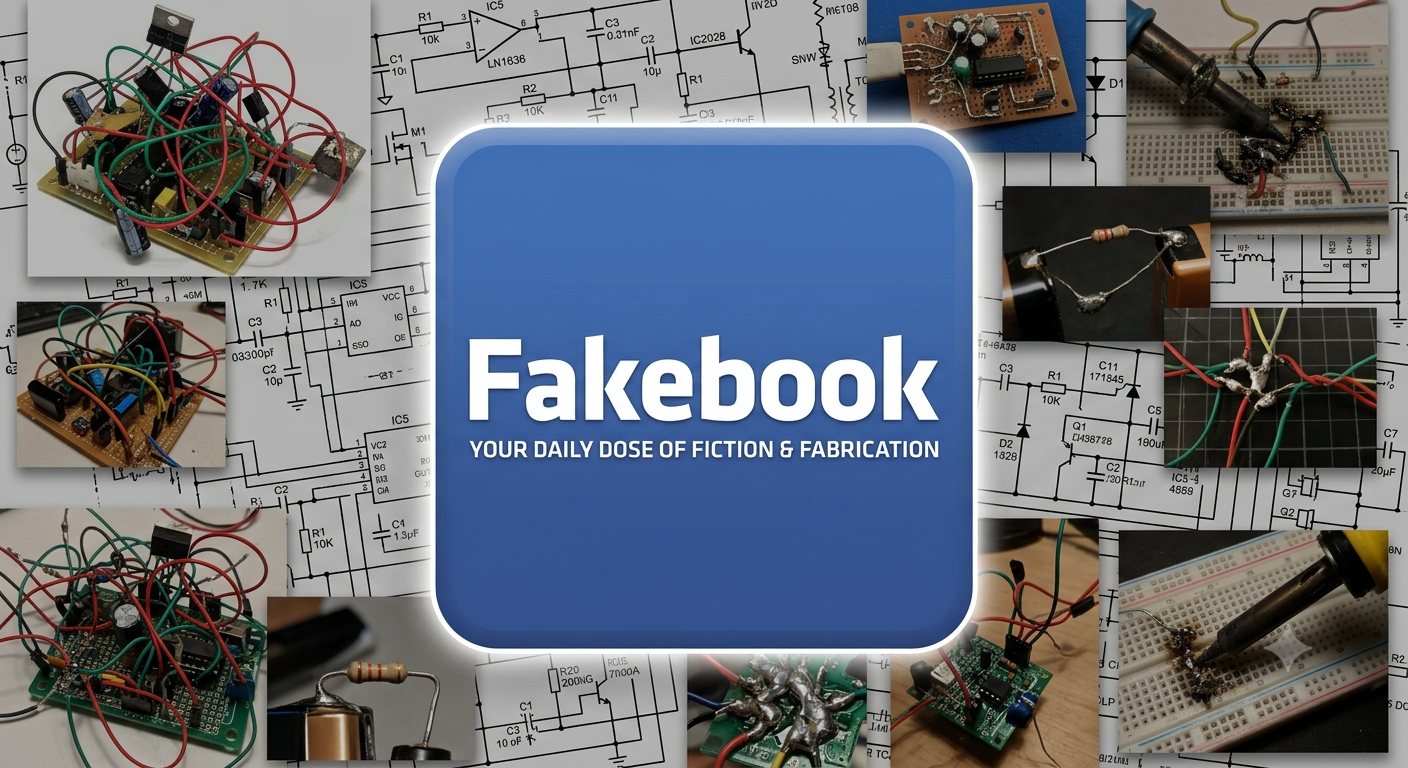
Facebook has become Fakebook of electronics.
The Cynical & Literal
World Wide Waste (WWW): Captures the sheer volume of digital slop, SEO bait, and unverified AI hallucinations filling up the index.
World Wide Wall (WWW): Refers to the endless paywalls, cookie consent popups, ad overlays, and login gates that obstruct basic navigation.
World Wide Window-shopping (WWW): Highlights how nearly every link ultimately resolves into a funnel trying to monetize your attention or push a subscription.
We use cookies to ensure that we give you the best experience on our website. If you continue to use this site we will assume that you are happy with it.
We are a professional review site that has advertisement and can receive compensation from the companies whose products we review. We use affiliate links in the post so if you use them to buy products through those links we can get compensation at no additional cost to you.OkDecline






54 Comments
Tomi Engdahl says:
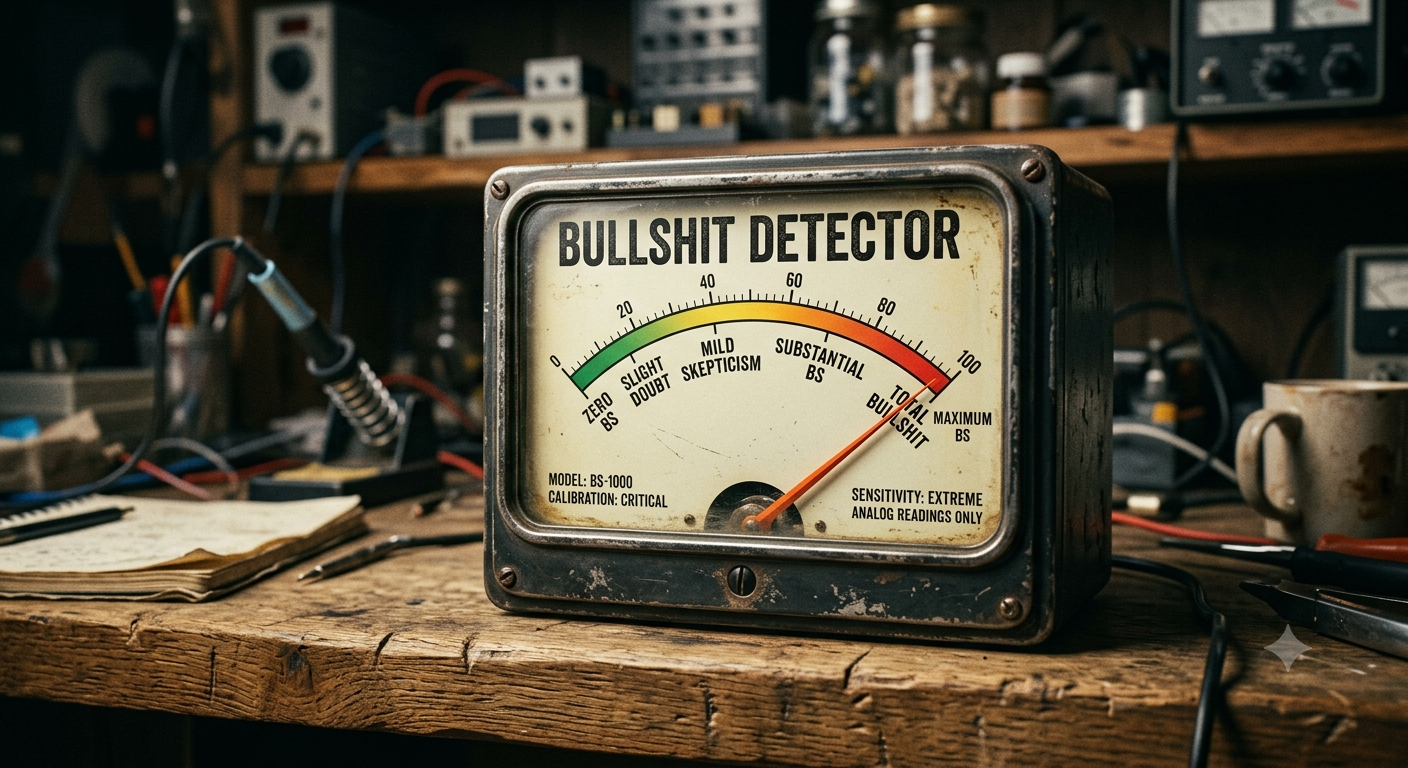
bullshittineering
Tomi Engdahl says:
The phrase “AI will eat the world” is a widely cited evolution of Marc Andreessen’s 2011 prediction that “software is eating the world.”
https://www.forbes.com/councils/forbesbusinesscouncil/2025/08/12/ai-is-eating-the-world/
Tomi Engdahl says:
AI should go back to schools. And also “content producers” that publish post without any verification (even chatGPT and Gemini could tell correctly most circuits posted to Facebook are viral AI trash that does not work).
Tomi Engdahl says:
That person who post AI bullshit to Facebook is probably a troll, an idiot, or both.
Or a troll-idiot who thinks he’s a great electronics expert.
Tomi Engdahl says:
The Dunning-Kruger effect is a cognitive bias where people with limited competence in a specific domain overestimate their abilities.
At the heart of the bias is a deficit in metacognition—the ability to objectively step back and evaluate one’s own thought processes and performance.
The “Unknown Unknowns”: People who are inexperienced in a subject lack awareness of the full scope of what is required to be an expert.Inability to Judge Quality: As Dunning pointed out, the skills required to produce a correct answer or good performance are the exact same skills required to recognize a correct answer. If you lack the skill, you cannot recognize when you are making a mistake.
Tomi Engdahl says:
The “AI content producer effect” refers to how generative AI drastically increases content velocity while fundamentally shifting the skill requirements for creators. It acts as a massive lever for productivity but risks commoditizing output if human oversight and unique creative vision are removed
The effect manifests across several key areas:1. Shift from Creator to “Producer”Rather than starting from a blank page, human creatives are transitioning into editors, directors, and quality-control specialists. AI excels at drafting, storyboarding, and technical fixes, allowing a single human to handle larger, multi-channel projects.
2. Democratization vs. HomogenizationSmaller independent studios and creators can now produce premium-looking visual or audio content without massive budgets. However, over-reliance on the same algorithmic models risks flooding platforms with repetitive, homogeneous “slop” that degrades audience engagement
3. The Two-Tiered IndustryThe market is increasingly divided into two tiers:Automated/Volume Tier: Fast, cheap, and routine production serving audiences who prioritize convenience or immediate consumption.Premium/Bespoke Tier: Highly sought-after, human-made content centered around authentic experiences, brand trust, and distinct artistic taste.
4. New Workflow BottlenecksWhile AI solves execution bottlenecks (like transcription or basic coloring), it introduces new ones: governance, ethical concerns, and fact-checking. Hallucinations remain a critical issue, requiring human verification for topics like brand messaging and legal compliance.
Tomi Engdahl says:
Useful comment:
This AI slop is useful only as “how many errors you can find in this picture” exercise
Tomi Engdahl says:
Prompting for electronics circuits with AI tools very rarely produces something that works. There is no value in publishing AI trash that does not work.
Tomi Engdahl says:
Most circuit disgrams on Facebook should come with this description:
This image contains highly inaccurate, nonsensical, and potentially dangerous electrical schematics.
Can u correct it..?
Tomi Engdahl says:
Many content producers should add this warning to pretty much every circuit diagram they have published in Facebpok:
This Facebook group contains highly inaccurate, nonsensical, and potentially dangerous electrical schematics.
Tomi Engdahl says:
When working on DIY electronics projects, it is essential to follow verified schematics that include proper safety features like fuses, heat sinks, and stable grounding.
Tomi Engdahl says:
This is content only…
Tomi Engdahl says:
If young people want to learn electronics they will be discouraged of all fake AI slop “electronics tutorials” and “circuits” posted to Facebook. It is very rare to see correct electronics info from various content producers.
Tomi Engdahl says:
99% of the schematics posted posted by some content producers are totally wrong. Are they playing a game called, “What’s wrong with this schematic”?
Tomi Engdahl says:
#lifestyle #CircuitDiagram = AI slop trash that does not work and not worth to look
Tomi Engdahl says:
Comment to use:
There is several problems with the circuit, the biggest is me wasting my time writing this statement.
Tomi Engdahl says:
It seems that due lazy “content producers” we can’t have nice electronics things in Facebook and all we get to see in fake AI slop.
Tomi Engdahl says:
This is another classic example of a nonsensical, AI-generated “social media circuit” that looks clean at first glance but is completely broken upon technical analysis.
Tomi Engdahl says:
Ban all the lazy “AI content producers” from Facebook. We have had enough of wrong circuits only to get interactions. They have made Facebook useless for any electronics information – over 90% of electronics designs you see in Facebook are nowadays wrong – many are dangerous as shown
Tomi Engdahl says:
Everything on FakeBook is generated from a Datacenter
麻雀ゲーム 無料 says:
It is frustrating how AI-generated noise dilutes actual expertise on social media. Distinguishing between quality and hollow repetition requires a sharp mind. When I need a break from technical verification, I enjoy testing my focus with this Mahjong https://webmahjong.net/ to keep my strategic thinking and memory sharp in a world of automated content.
Mahjong says:
2026
Tomi Engdahl says:
Advice to content producers:
IF YOU ARE GOING TO PUBLISH TECHNICAL ADVICE THEN MAKE SURE IT IS CORRECT!
Tomi Engdahl says:
As the internet fills with AI-generated articles, reviews, summaries, and spam, developers face an unexpected problem: future models may increasingly be trained on content produced by earlier models.
Tomi Engdahl says:
You’ve heard of Energy Harvesting circuits?
This is a Click-Farming circuit.
Tomi Engdahl says:
Facebook has turned so much FakeBook that maybe it should add similar report AI slop button like linkedin – with default pressed down.
Tomi Engdahl says:
Peter Keuning
The prevalence of AI-generated fake electronic circuits on Facebook and other platforms is driven by a combination of algorithmic incentives, the nature of image-generation models, and automated monetization strategies.
1. Algorithmic “Correction Baiting” (Rage Engagement)
The Mechanism: When a post shows a transistor shorting power directly to ground or a circuit with impossible pinouts, experienced hobbyists and engineers immediately comment to correct, mock, or warn others.
2. Monetization & High-Volume Spam
Bonus Programs & Ad Revenue: Facebook pays creators based on performance, impressions, and engagement on public posts.
3. AI Models Lack Domain Logic
Visual Pattern Matching, Not Physics: Generative AI image tools (like Midjourney or Stable Diffusion) do not understand circuit theory, current flow, or component pinouts. They are trained purely on visual patterns.
4. Account Farming and Monetization Funnels
Building Audience to Sell: Page operators use high-frequency AI slop to rapidly grow followers and group member counts.
Tomi Engdahl says:
https://www.facebook.com/share/p/1CrMvhaAve/
As is typical with electronic schematics posted on Facebook, the author intentionally includes errors solely to prompt you to comment and point them out. The goal is to boost their visibility, since on Facebook, that depends on the number of reactions a post receives—regardless of what those reactions are.
Ideally, the best approach would be simply not to respond to these posts, as doing so only encourages this behavior.
But that’s easier said than done when you see all the nonsense being posted…
Tomi Engdahl says:
Commen to say to AI slop producers:
I will start follow you when you will post working circuit! This is again collection of errors.
Tomi Engdahl says:
Do not consider random circuits you see on Facebook, they are mostly wrong. Do not consider any circuit marked as AI produced content – they are pretty much always wrong.
Tomi Engdahl says:
AI is like a box of chocolates …you never know what you’re gonna get.
Tomi Engdahl says:
It seem that the content producer just asks AI to make random circuits, and as you can see generic AI tools are pretty bad in drawing electronics circuits.
In addition to that the content producer does not seem to have needed competence to verify the quality of content before publishing. Or is so lazy that does not bother to do any verification before posting.
Tomi Engdahl says:
I’m more concerned about Genuine Stupidity than Artificial Intelligence
Tomi Engdahl says:
As is typical with electronic schematics posted on Facebook, the author intentionally includes errors solely to prompt you to comment and point them out. The goal is to boost their visibility, since on Facebook, that depends on the number of reactions a post receives—regardless of what those reactions are.
Ideally, the best approach would be simply not to respond to these posts, as doing so only encourages this behavior.
But that’s easier said than done when you see all the nonsense being posted…
Tomi Engdahl says:
Stop posting not working AI slop and start publishing books with real content. You can see from cover that you are expected to get a fake book with lots of useless not working AI slop in it.
Every earlier book (a few) from electronic7 i have checked has had seen has had very low quality content with errors.
Tomi Engdahl says:
Comment to use:
This circuit is completely fake and does not work as shown. Ask any competent electronics engineer and he can come to the same conclusion.
Do not trust this circuit.
Do not trust any circuit you see in Facebook unless verified by third party (over 90% circuits are not working AI trans).
Do not trust anything fron Facebook groups that post fake circuit AI trash.
Tomi Engdahl says:
Don’t trust random “circuit diagrams” you see on Facebook, they are almost always not working AI slops
Tomi Engdahl says:
Comments seen:
I’m finding out that ALL these Schematics HAVE ERRORS, INTENTIONALLY Only to Generate, debate and discussions….
THAT’s HOW you Maximize the MONETIZING……
it’s not about “DIY Electronics” it’s about MONETIZING….
(even IF the stuff they put out is USELESS)
Tomi Engdahl says:
So many mistakes…..so little time
Zoggo says:
Haha these are brilliant! I genuinely need these as actual physical rubber stamps for half the reports I have to review at work.
Tomi Engdahl says:
Answer to use
“This is a dangerous fake circuit.
Please stop posting fake electronics circuit to Facebook. Electronics circuit diagrams are clearly a thing you and your AI tool knows – because almost all circuit posted here are wrong! So wrong that anyone who knows electronics see that they are wrong. Even mainstream AI tools can see that they do not work.”
Tomi Engdahl says:
Act as a senior hardware design and diagnostic engineer specializing in analog, power, and embedded circuit analysis.
Whenever I upload a circuit diagram or schematic image, perform a rigorous technical audit using the following structure:
1. AI Render & Text Hallucinations:
– Identify nonsensical, inverted, or gibberish component text/labels.
– Flag physically impossible connections, floating solder nodes, or incorrect 3D renders.
2. Critical Electrical & Safety Flaws:
– Biasing & Pinout Errors: Check transistor polarity (NPN vs. PNP), terminal orientation (B-C-E), and op-amp supply/feedback routing.
– Power & Short Hazards: Spot direct supply shorts, missing current-limiting, and severe overcurrent risks.
– AC/Mains Safety: Highlight reactive dropper risks, dielectric breakdown, missing bleeder resistors, or high-voltage shock hazards.
– Signal Integrity: Spot dead feedback loops, phase inversions, floating nodes, or missing flyback diodes.
3. Core Functional Assessment:
– Explain why the circuit fails in its stated function (e.g., why an oscillator latches DC, why a dropper collapses under load).
4. Practical Corrective Action:
– Provide concise step-by-step instructions or proper component values to turn it into a real, functioning circuit.
Keep the tone direct, precise, and focused on physical circuit behavior. Skip generic conversational fluff.
Tomi Engdahl says:
He is as right as saying, I am a nobody, nobody is perfect, therefore I am perfect.
Tomi Engdahl says:
Süleyman Kondakci content producers don’t even need natural intelligence, running their slop just to some other AI would tell correctly in most cases that their circuit does not work.
Google Gemini or ChatGPT will very often tell correctly that the circuit does not work.
Tomi Engdahl says:
Technical content should be accurate, not just made to look impressive. AI-generated images can easily miss critical components or create unsafe designs, so it’s always better to verify the circuit before trusting or building it.
Tomi Engdahl says:
if it is in Facebook, marked being made with AI or with lifestyle tag, it is more than 90% propabability of being not working AI trash and not a real circuit.
Facebook has become Fakebook of electronics.
Tomi Engdahl says:
maybe the AI that many Facebook “content producers” use should be renamed AS (Artificial Stupidity).
And Facebook should be renamed Fakebook
Tomi Engdahl says:
AI is destroying the net . No longer a source of information .
Just fake news for click bait to sell advertising and advertising
Tomi Engdahl says:
The Cynical & Literal
World Wide Waste (WWW): Captures the sheer volume of digital slop, SEO bait, and unverified AI hallucinations filling up the index.
World Wide Wall (WWW): Refers to the endless paywalls, cookie consent popups, ad overlays, and login gates that obstruct basic navigation.
World Wide Window-shopping (WWW): Highlights how nearly every link ultimately resolves into a funnel trying to monetize your attention or push a subscription.
Tomi Engdahl says:
Comment for most schematics on Facebook:
You need to get a refund on your education or your schematic editor.