Microsoft is developing major data center regions in Southern Finland and expanding to a new site in the GigaVaasa industrial zone on the west coast. Microsoft’s Hepokorpi Datacenter Project is located in the Hepokorvenkallio area of Högnäs, Espoo, the site spans roughly 28 hectares (with 21.6 hectares acquired from the City of Espoo in late 2023 for €30.9 million). It forms a key pillar of Microsoft’s cloud region in Southern Finland alongside complementary sites in Kirkkonummi and Vihti. Together, these facilities expand Europe’s cloud and AI capacity.
In addition to providing computing, data storage and AI services, the new data center will the the World’s Largest District Heat Recovery Scheme. Excess heat produced by the datacenter servers will be captured and routed into the local district heating network serving Espoo, Kirkkonummi, and Kauniainen. The system is set to cover 40% of the annual heating needs for roughly 250,000 households. Reusing this heat is projected to eliminate 400,000 metric tons of CO₂ emissions annually by displacing fossil fuel usage because the power for data center is sourced entirely from renewable energy.
Construction at Hepokorpi has progressed steadily through phases of ground preparation, rock excavation, and steel frame erection, and some of the first building are already built.
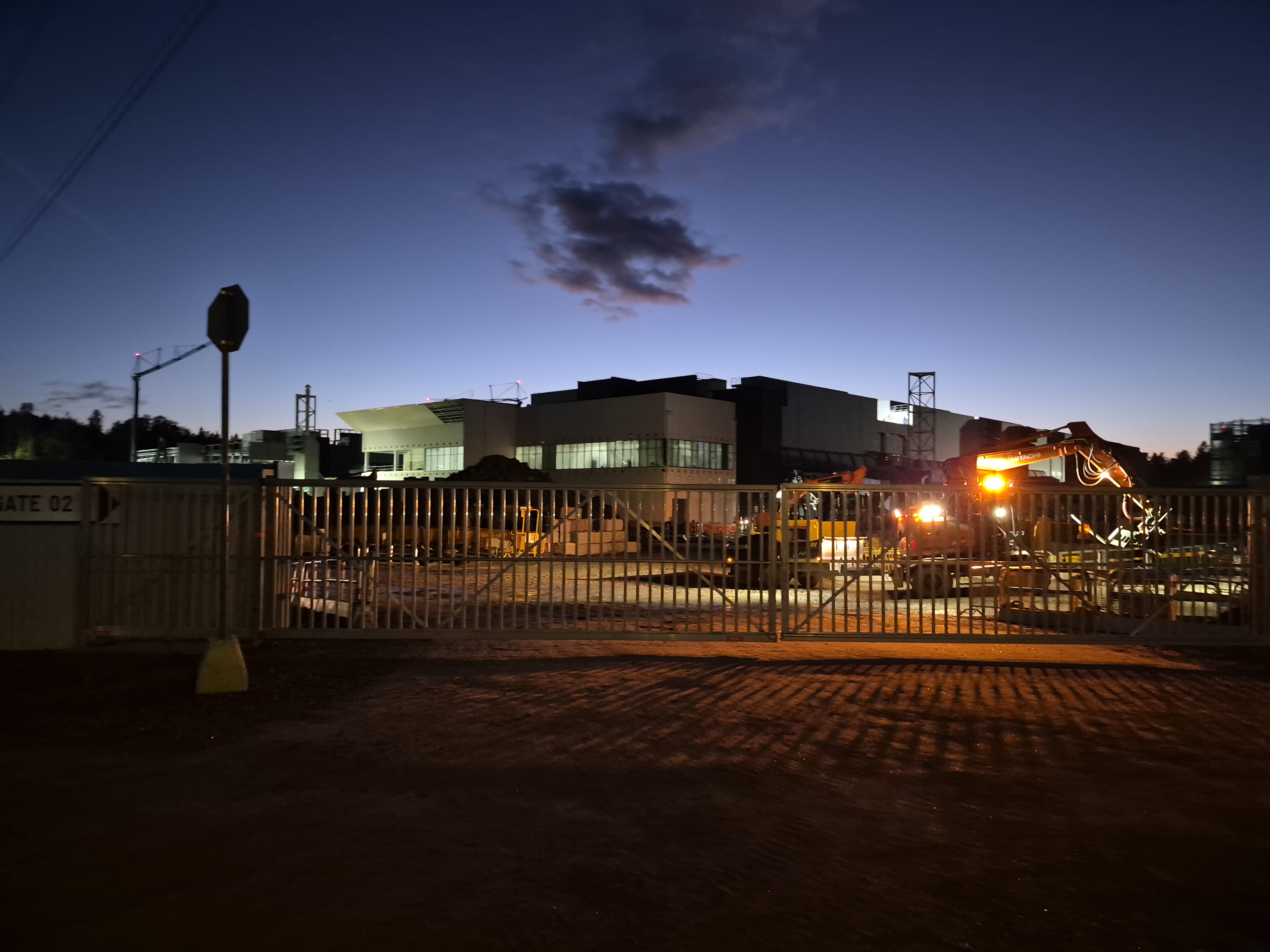
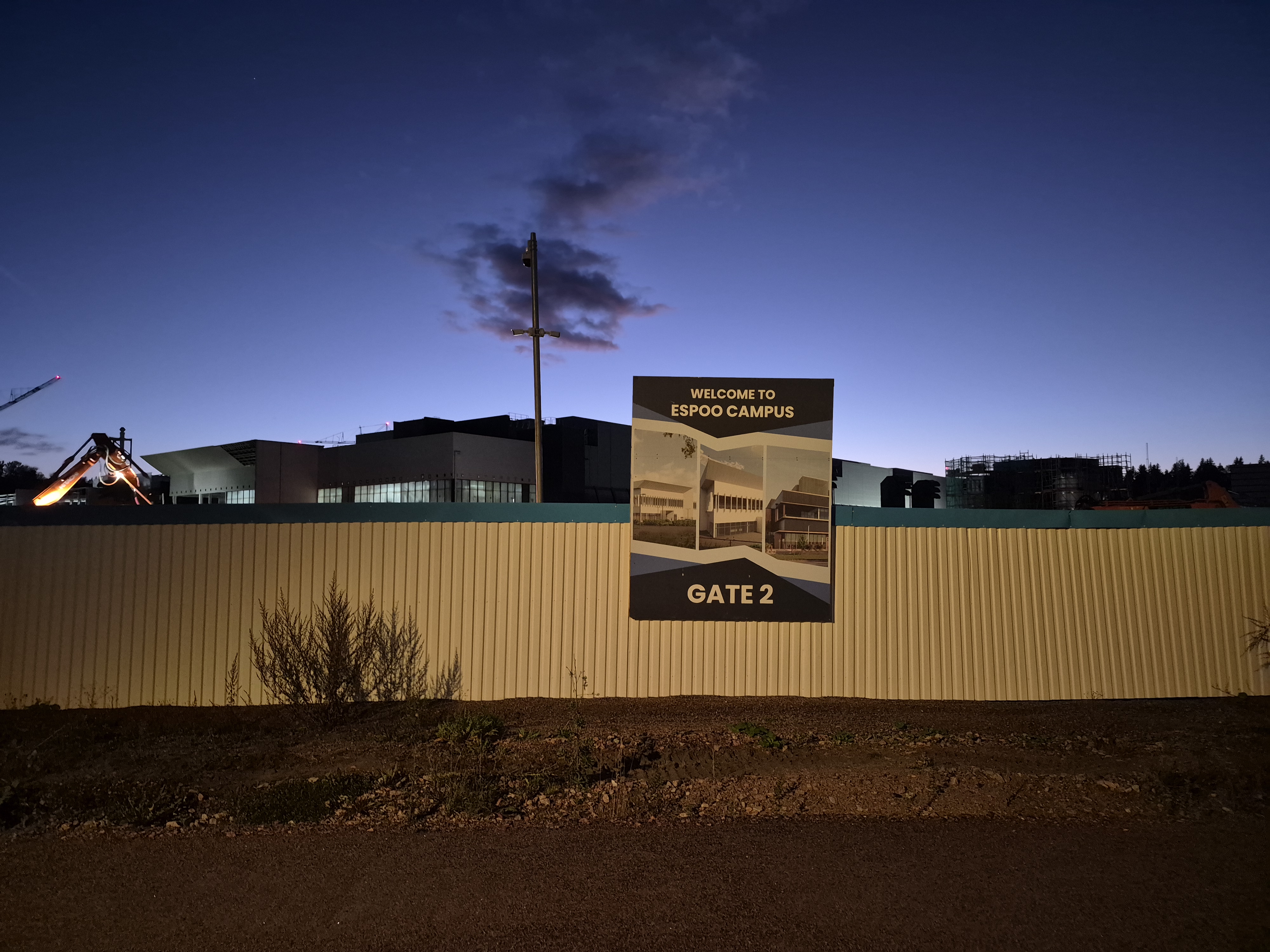
The data center needs a lots of power. While Microsoft does not publicly disclose precise, operational server power capacity figures for individual datacenter halls, official environmental impact assessments and project plans provide clear technical estimates: Estimated Electrical Capacity (IT & Infrastructure Load): Up to ~100 MW (with environmental impact assessments for the broader site evaluating total capacity scales around 100 MW to 200 MW across various expansion phases). For this reason the data center seems to be connected to a big new transformer connected to 400 kV power line. That would mean up to almost 300A current taken from 400 kV three phase power line.
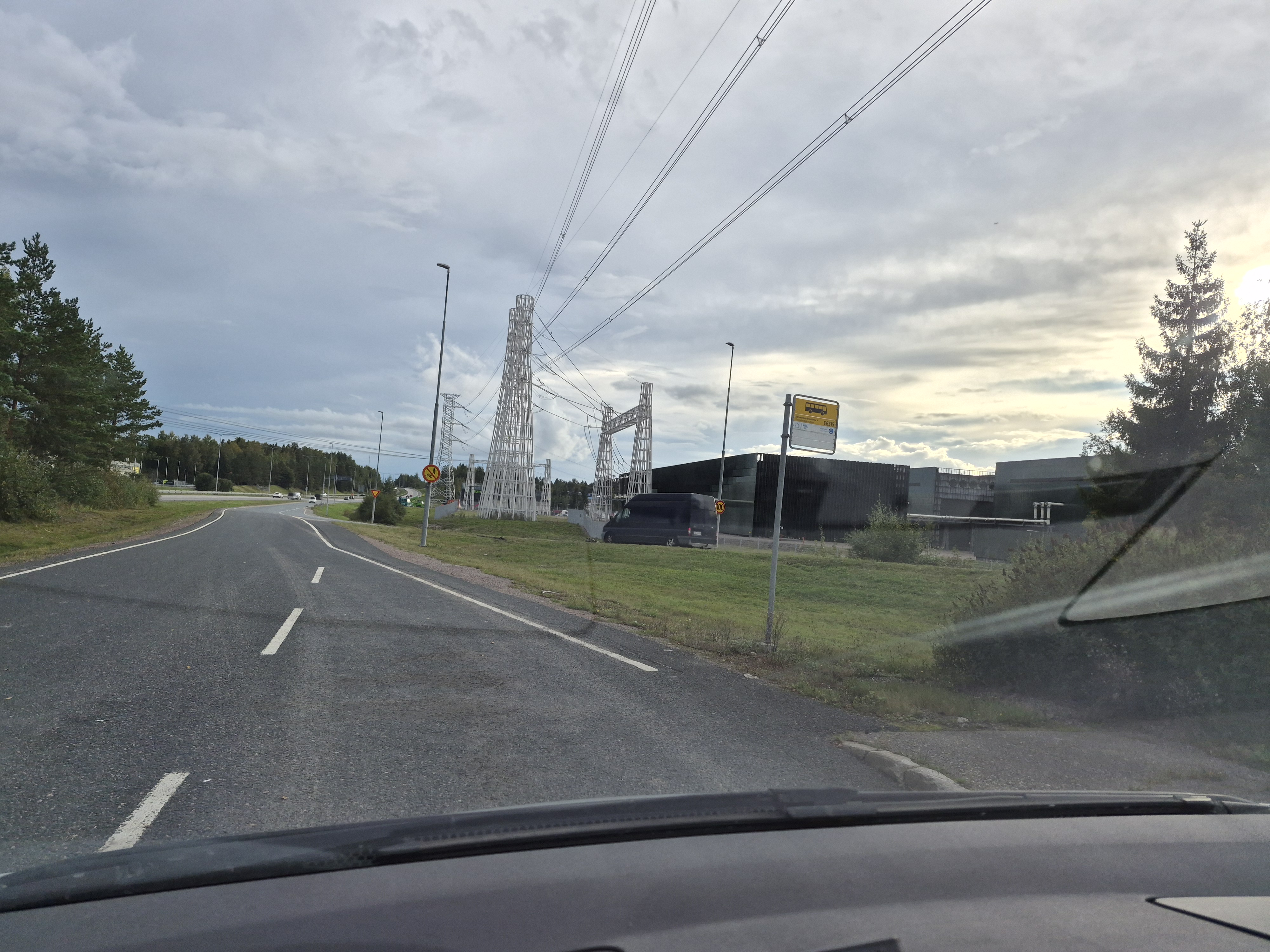
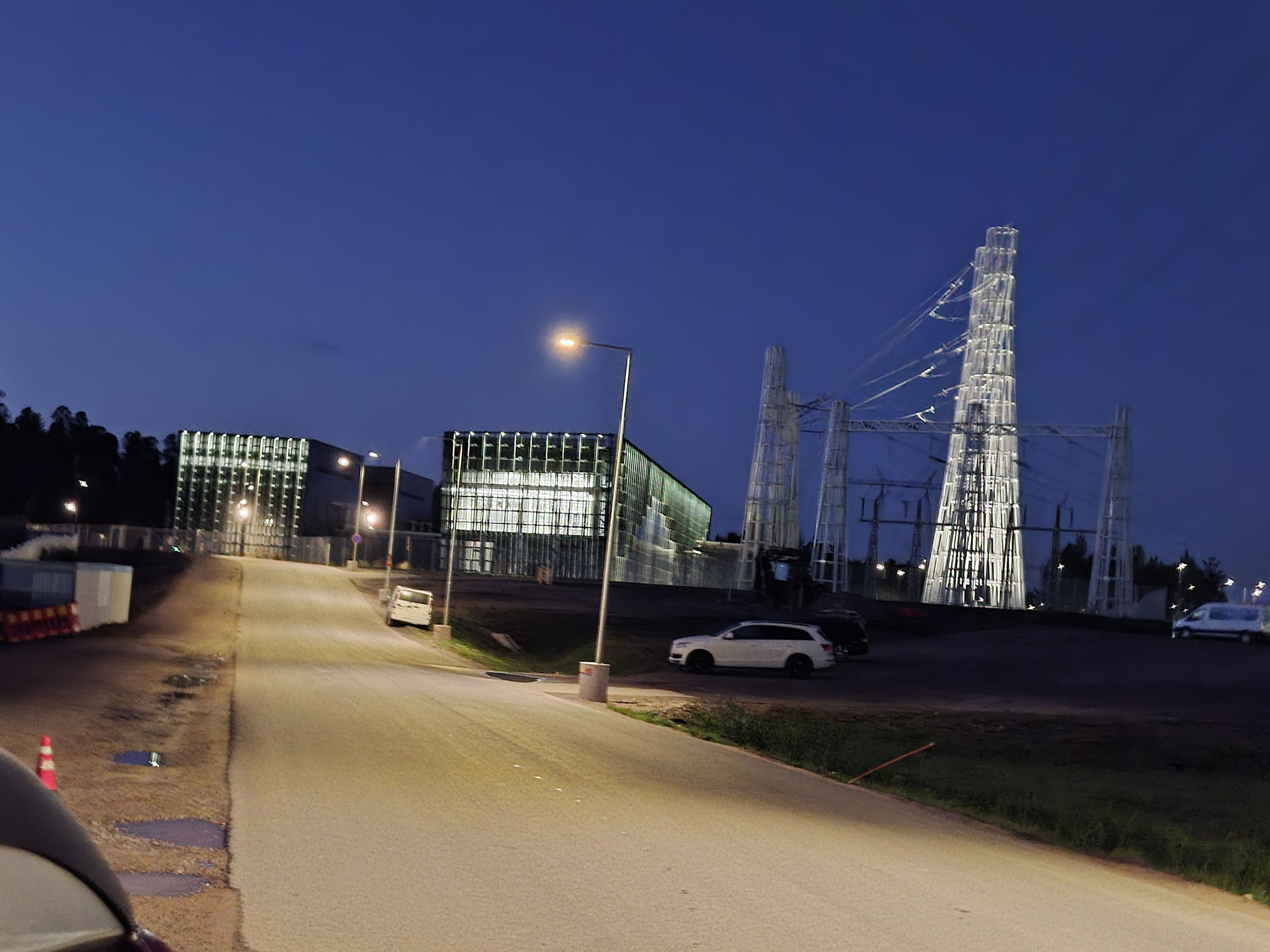
It looks the voltage is dropped to 110 kV level that is then sent to the data center buildings, although. Fingrid’s newly built main Hepokorpi primary transmission substation actually steps down the 400 kV grid power to 110 kV using compact Gas-Insulated Switchgear (GIS) technology. From there, regional sub-transmission lines and Caruna’s local distribution network route that 110 kV into Microsoft’s on-site transformers. On-site step-down transformers convert 110 kV to 20 kV (a standard medium-voltage level used in Nordic industrial facilities and distribution networks) that is most probably routed around the campus with medium voltage cables.
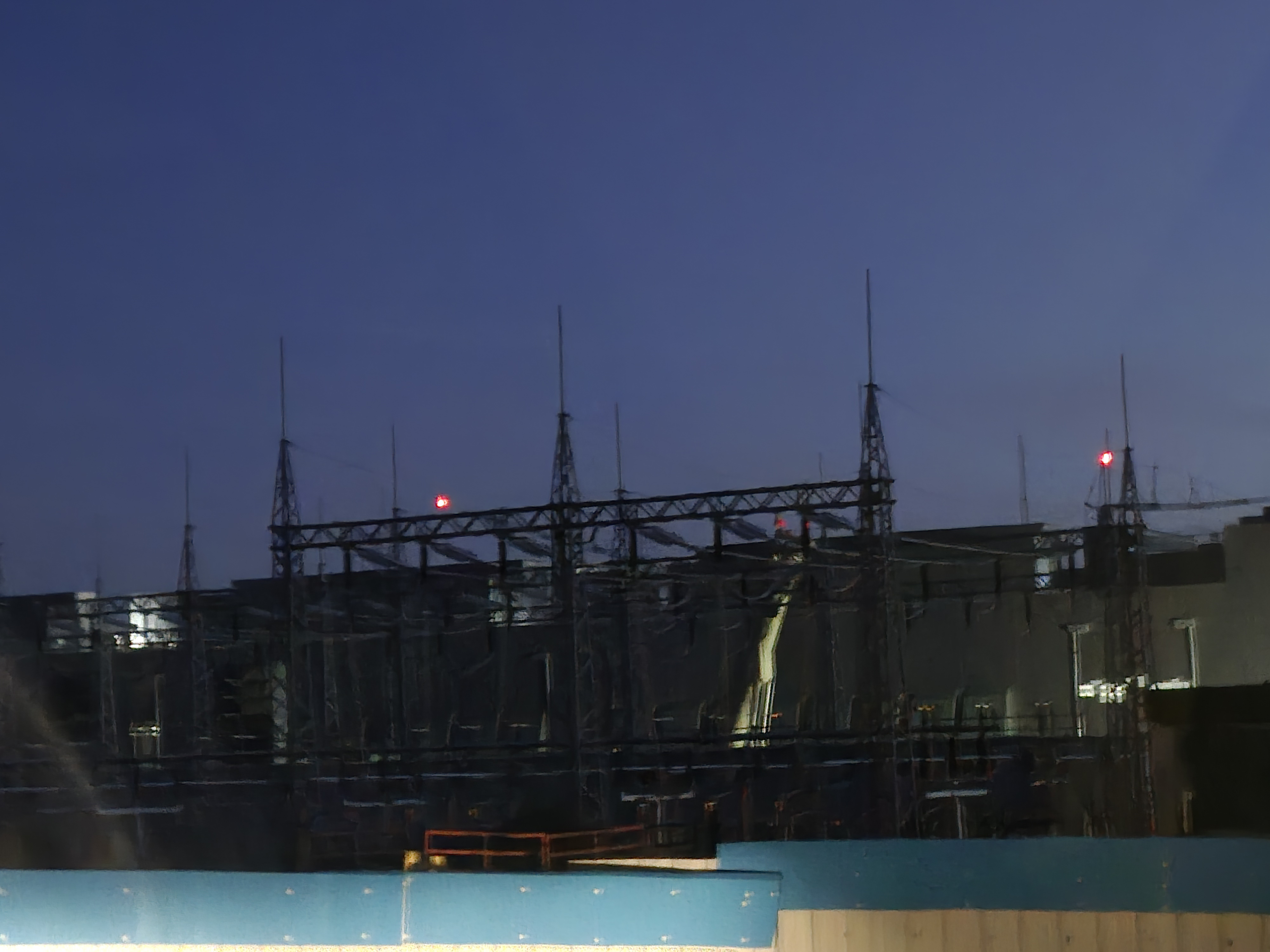
There it would be dropped with another transformer to the voltage level used by the data center computers. While Microsoft keeps precise proprietary server supply specs confidential, these follow standard OCP / Open Compute Project hyperscale architectures): Dry-type transformers step the 20 kV down to 400 V 3-phase AC line-to-line (230 V AC line-to-neutral). This feeds the Uninterruptible Power Supply (UPS) units and Power Distribution Units (PDUs). In Europe typical primary operational voltage feeding the rack server power supplies is 400 V / 230 V AC (3-phase 400 V AC input, delivering 230 V AC per phase). Server rack Power Supply Units (PSUs) convert 230/400 V AC directly down to 48 V DC distributed along the rack busbars. Modern high-density AI nodes (e.g., NVIDIA MGX/DGX racks used in Microsoft Azure AI clusters) rely on 48 V DC (lower losses than legacy 12V systems).
Microsoft’s Finland data-center project demonstrates how computing infrastructure can become part of a city’s heating system. Microsoft says waste heat (roughly 100 MW to 175 MW) from its Finnish data centers will eventually provide heat for around 250,000 people through district heating networks serving Espoo, Kauniainen and Kirkkonummi. The system uses heat pumps to raise the temperature of heat recovered from the data-center cooling system before it is transferred into the municipal heating network. I suspect that this building to be part of the heat pump system.
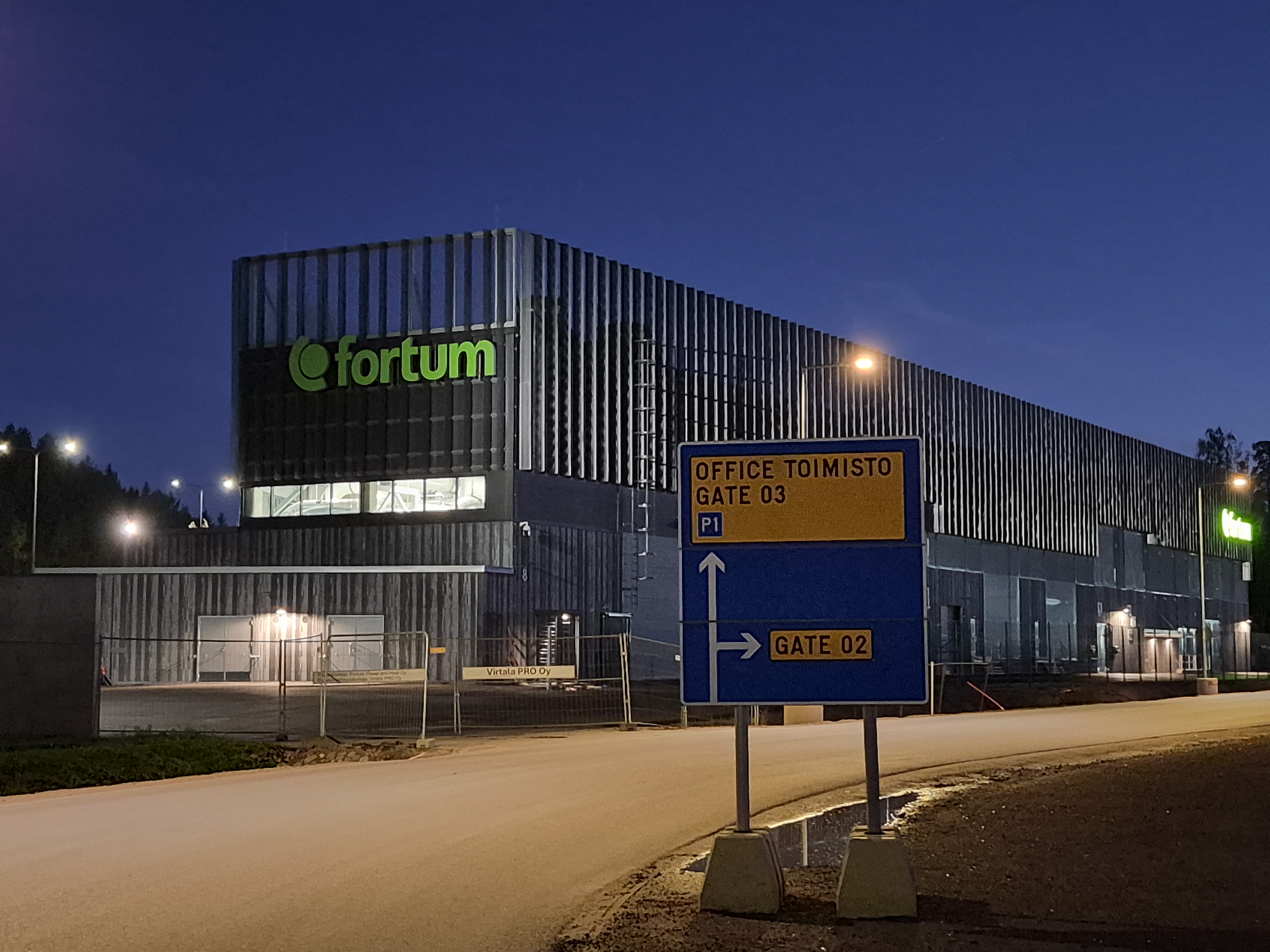
The recovery system requires infrastructure and energy — but that waste heat which would otherwise be rejected can be put to productive use. This approach could become increasingly valuable in colder regions where district heating is already widespread. Microsoft says the system is scheduled to begin operations in 2027. Combined with Microsoft’s sister facility in Kirkkonummi (Kolabacken), the joint campus footprint accounts for up to 350 MW of total thermal heat recovery for Fortum’s regional district heating grid.
5 Comments
Tomi Engdahl says:
So much for “community-first AI.” https://trib.al/KmbiNjc
Ghosted
Microsoft Shrivels When Asked If Its “Good Neighbor” Data Center Policy Will Involve Actually Supporting Community Groups
So much for “community-first AI.”
https://futurism.com/artificial-intelligence/microsoft-shrivels-good-neighbor-community-first-ai-data-center?fbclid=IwdGRjcAUoU2xjbGNrBShTVmV4dG4DYWVtAjExAHBkb2YFc3J0YwZhcHBfaWQMMzUwNjg1NTMxNzI4AAEeBBcJhEJdj-WqUmfjPZzvY-TLHhr7NsJXknLHroQ0lMnI5_v1e7b0smx_pDM_aem_AmNn7XjdD04BtUj3xkvH1g
As tempers flared around AI data centers back in January, Microsoft’s president Brad Smith issued a warm and fuzzy blog post about “building community-first AI infrastructure.”
Smiths’ essay outlined a five-point plan to “partner with local communities across the United States,” with action-items like paying “our way to ensure our data centers don’t increase your electricity prices” and creating “jobs for your residents.” One bullet point spoke to Microsoft’s plan to “strengthen your community by investing in local AI training and non-profits.”
That all sounds lovely, at least on paper. But as a group of community organizers in Indiana learned, those liaisons are much more interested in laundering Microsoft’s image in data center towns than in actually supporting local programs.
Tomi Engdahl says:
Näin datakeskusta ruokitaan sähköllä Espoossa – video
https://tekniikanmaailma.fi/nain-datakeskusta-ruokitaan-sahkolla-espoossa-video/
Suomen kantaverkkoa operoivan Fingridin uusi sähköasema sijaitsee Kehä 3:n ja jykevien voimalinjojen varrella Espoon Hepokorvessa.
Sen naapuriin nousee Microsoftin uusi datakeskus. Naapuritontilla datakeskuksen hukkalämpöä kaukolämmöksi jalostava Fortumin lämpöpumppulaitos on jo valmiina.
70 miljoonan euron hintaisen sähköaseman kautta sähkö kulkee paitsi näille uusille suurkuluttajille, myös monelle espoolaiselle kotitaloudelle.
Tomi Engdahl says:
Map location
https://www.google.com/maps/@60.2390256,24.6901811,992m/data=!3m1!1e3?entry=ttu&g_ep=EgoyMDI2MDkyNy4wIKXMDSoASAFQAw%3D%3D
Tomi Engdahl says:
https://www.datacenters.com/locations/finland/uusimaa/uusimaa
Tomi Engdahl says:
https://www.facebook.com/share/p/1CQhcnk7Jq/
Microsoftin Espoon datakeskus edennyt kesän aikana merkittävästi. Microsoft teki ympäristöselvitykset esimerkillisesti, mutta sillä ei ollutkaan sellainen tulipalokiire kuin näillä myöhemmin aloittaneilla.
Kommentteja:
Ei tehnyt. Luontoselvitykset oli kesken, kun lupia kumileimattiin.
Isot dieselsäiliöt varavoimaa varten järvilehdossa.
Lähimmät tuulivoimalat on Pohjanmaalla 600 km ja ydinvoimala Loviisassa 100 km päässä.
Jos datakeskus olisi businesskriittistä dataa/palveluita varten, se olisi 40 m syvällä kalliossa, ei järvilehdossa.
No tuolla tullaan ymmärtääkseni käsittelemään kaikkien meidän dataa mitä valtionhallinto tarvitsee kelasta lähtien, sekä yritysten dataa. Kaikkien dataa jotka käyttävät Windowsia ja office365- toimustosovelluksia, sekä copilotia. Varsin kriittinen siis.