Innovation is about finding a better way of doing something. Like many of the new development buzzwords (which many of them are over-used on many business documents), the concept of innovation originates from the world of business. It refers to the generation of new products through the process of creative entrepreneurship, putting it into production, and diffusing it more widely through increased sales. Innovation can be viewed as t he application of better solutions that meet new requirements, in-articulated needs, or existing market needs. This is accomplished through more effective products, processes, services, technologies, or ideas that are readily available to markets, governments and society. The term innovation can be defined as something original and, as a consequence, new, that “breaks into” the market or society.
Innoveracy: Misunderstanding Innovation article points out that there is a form of ignorance which seems to be universal: the inability to understand the concept and role of innovation. The way this is exhibited is in the misuse of the term and the inability to discern the difference between novelty, creation, invention and innovation. The result is a failure to understand the causes of success and failure in business and hence the conditions that lead to economic growth. The definition of innovation is easy to find but it seems to be hard to understand. Here is a simple taxonomy of related activities that put innovation in context:
- Novelty: Something new
- Creation: Something new and valuable
- Invention: Something new, having potential value through utility
- Innovation: Something new and uniquely useful
The taxonomy is illustrated with the following diagram.
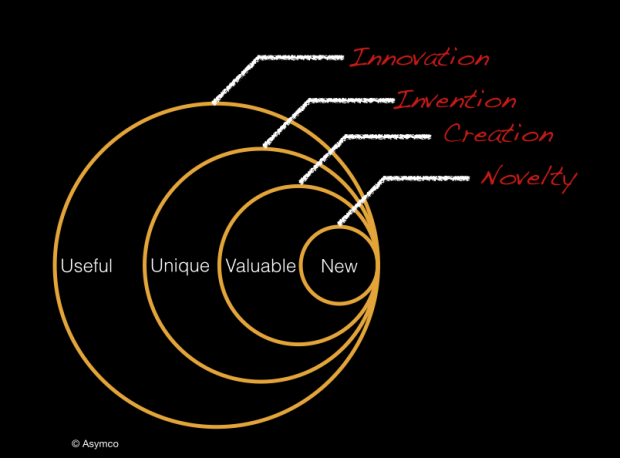
The differences are also evident in the mechanisms that exist to protect the works: Novelties are usually not protectable, Creations are protected by copyright or trademark, Inventions can be protected for a limited time through patents (or kept secret) and Innovations can be protected through market competition but are not defensible through legal means.
Innovation is a lot of talked about nowdays as essential to businesses to do. Is innovation essential for development work? article tells that innovation has become central to the way development organisations go about their work. In November 2011, Bill Gates told the G20 that innovation was the key to development. Donors increasingly stress innovation as a key condition for funding, and many civil society organisations emphasise that innovation is central to the work they do.
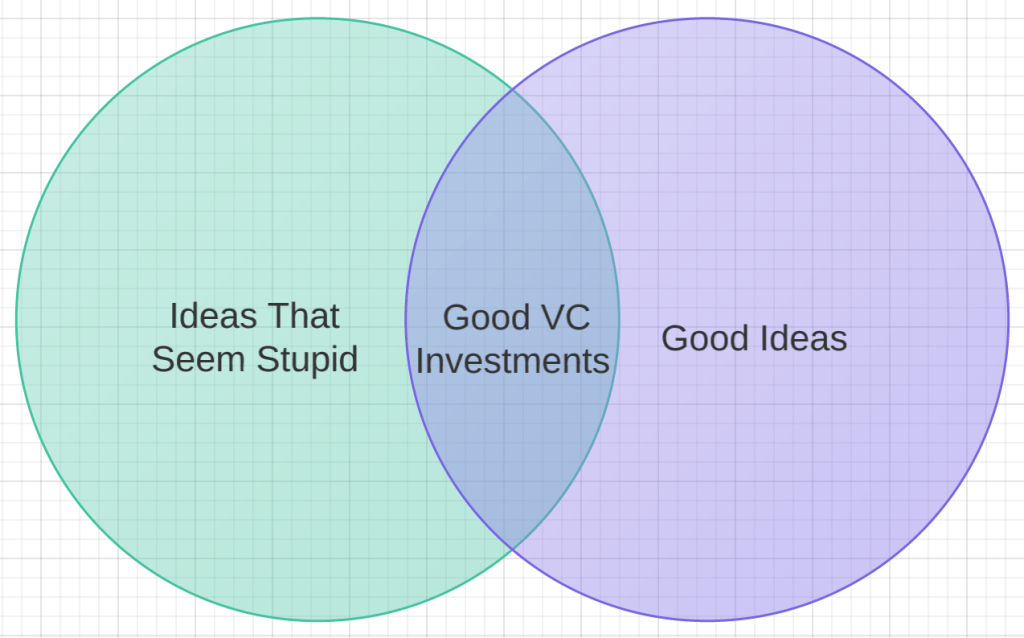
Some innovation ideas are pretty simple, and some are much more complicated and even sound crazy when heard first. The is place for crazy sounding ideas: venture capitalists are gravely concerned that the tech startups they’re investing in just aren’t crazy enough:
Not all development problems require new solutions, sometimes you just need to use old things in a slightly new way. Development innovations may involve devising technology (such as a nanotech water treatment kit), creating a new approach (such as microfinance), finding a better way of delivering public services (such as one-stop egovernment service centres), identifying ways of working with communities (such as participation), or generating a management technique (such as organisation learning).
Theorists of innovation identify innovation itself as a brief moment of creativity, to be followed by the main routine work of producing and selling the innovation. When it comes to development, things are more complicated. Innovation needs to be viewed as tool, not master. Innovation is a process, not a one time event. Genuine innovation is valuable but rare.
There are many views on the innovation and innvation process. I try to collect together there some views I have found on-line. Hopefully they help you more than confuze. Managing complexity and reducing risk article has this drawing which I think pretty well describes innovation as done in product development:

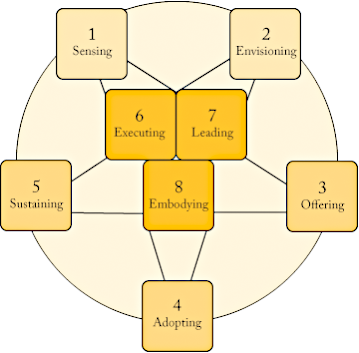
8 essential practices of successful innovation from The Innovator’s Way shows essential practices in innovation process. Those practices are all integrated into a non-sequential, coherent whole and style in the person of the innovator.
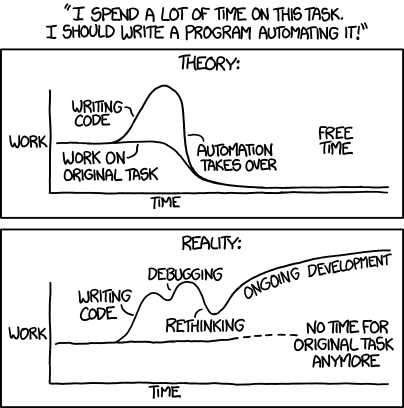
In the IT work there is lots of work where a little thinking can be a source of innovation. Automating IT processes can be a huge time saver or it can fail depending on situation. XKCD comic strip Automation as illustrates this:
System integration is a critical element in project design article has an interesting project cost influence graphic. The recommendation is to involve a system integrator early in project design to help ensure high-quality projects that satisfy project requirements. Of course this article tries to market system integration services, but has also valid points to consider.

Core Contributor Loop (CTTDC) from Art Journal blog posting Blog Is The New Black tries to link inventing an idea to theory of entrepreneurship. It is essential to tune the engine by making improvements in product, marketing, code, design and operations.

6,150 Comments
Tomi Engdahl says:
Purple Clothes Using Nobel-Prize Winning Chemistry Could Keep You Cool With The Power Of Outer Space
Usually you want lighter clothes to stay cool in summer weather, but these purple threads have even more cooling power despite their color.
https://www.iflscience.com/purple-clothes-using-nobel-prize-winning-chemistry-could-keep-you-cool-with-the-power-of-outer-space-84458?fbclid=IwdGRjcAT9B9RjbGNrBP0HhXBkb2YFZXh0bgNhZW0CMTEAc3J0YwZhcHBfaWQMMzUwNjg1NTMxNzI4AAEes50rA1bxtXwV3TE_QTwWxUrjN6x9VCy-ys7NKO3awLzkqJG_MI-s55I40mU_aem_mkVJz8KMQOgMQVbUdoEx0Q
Tomi Engdahl says:
https://www.facebook.com/share/p/19BQgmL5hC/
Scientists have demonstrated a new way to send information using light that can remain reliable even when the beam is distorted by turbulent air.
Researchers from Wits University in South Africa and the University of Bordeaux in France sent specially structured light through a 270-meter outdoor link in real atmospheric conditions. The study was published in Science Advances on August 14, 2026.
The team used special patterns of light called optical skyrmions. These patterns have a mathematical property called topology, which can remain stable even when the light itself becomes heavily distorted.
As the beam traveled through the atmosphere, heat, wind and turbulence changed its appearance. Normally, this kind of distortion can make information carried by a laser difficult to recover.
But the researchers found that the topological information remained intact.
The system achieved more than 98% information fidelity in most of the conditions tested. Even under the strongest turbulence tested, it retained about 86% fidelity.
The experiment is important because atmospheric turbulence is a major challenge for free-space optical communication — sending information through the air using laser light instead of fiber-optic cables.
The technology could eventually help improve high-speed optical communication between buildings, aircraft, satellites and ground stations. It could also have potential applications in quantum communication.
However, this was still a 270-meter research demonstration, not a finished long-distance communication system. More research is needed to determine how the technique performs over much longer distances and under different atmospheric conditions.
Source: Peters et al., Science Advances — “Topological robustness of optical skyrmions through a real-world free-space link.”
Tomi Engdahl says:
The eight-hour sleep rule is outdated, new study suggests. Here’s how much you really need
The idea dates back to the mid-19th century when the notion of eight hours of work, eight for recreation and eight for sleep first took hold
https://www.independent.co.uk/life-style/health-and-families/how-much-sleep-eight-hours-adults-b3040786.html?utm_source=taboola&utm_medium=related&utm_campaign=embed1&fbclid=IwVERDUAT_RsZwZG9mBWV4dG4DYWVtAjEwAHNydGMGYXBwX2lkDDM1MDY4NTUzMTcyOAABHr6-nYzjgS1znugMlMIJbRyaPz55qPgHJ3rty72_BcuKSF28rs4UlZ-vHH4f_aem_gSnUcZFyv0opC7uKAiP2nw
For decades, the answer to “how much sleep does an adult need?” has been simple: eight hours. The idea dates back to the mid-19th century when the notion of eight hours of work, eight for recreation and eight for sleep first took hold.
But growing evidence suggests that eight hours may not be the ideal amount of sleep for everyone, as a new narrative review in Brain Medicine reminds us.
In one early study, researchers found that people in Tanzania, Namibia and Bolivia slept for between 5.7 and 7.1 hours a night. These short sleep durations can’t be attributed to traffic noise, social media use or too much artificial light at night.
The short nights also seemed to be enough: people did not make up for them with long daytime naps. Without an alarm clock, they tended to wake close to dawn, regardless of the day of the week.
But one recent analysis estimated the average to be 6.4 hours.
So, is eight hours too much? These studies make an important assumption that the amount people naturally sleep is the amount they need. That assumes that hunter-gatherers are free from stress, busy schedules and other pressures on sleep. But is that really the case?
But other evidence has emerged from large studies looking at the relationship between sleep and health in industrialised societies.
If we define optimal sleep as the amount linked to the best health, many large studies suggest the sweet spot may be less than eight hours. One recent study used brain and body scans and molecular measures to look at how sleep relates to the ageing of different organs. It estimated the optimal amount to be between 6.4 and 7.8 hours, depending on the person’s sex and the organ being studied.
Many studies find that both too little and too much sleep are linked to poorer health, including heart disease, stroke, cognitive decline and obesity. But scientists are still debating whether too much sleep causes poor health or is instead an early sign of it. Either way, these findings challenge the idea that everyone needs exactly eight hours and suggest that consistently sleeping for much longer may be worth paying attention to.
However, all these estimates of optimal sleep duration are based on averages, and the average person does not exist. When given enough opportunity to sleep, studies find that young adults sleep longer than healthy older adults. Even people of the same age can need very different amounts of sleep.
Current sleep duration recommendations, from the National Sleep Foundation in the US, reflect these individual differences. It says that adults aged 26 to 64 should get between seven and nine hours of sleep per day, but that sleeping between six and ten hours may be appropriate for some adults. That is a long way from the one-size-fits-all eight-hour rule.
Most of us do not wake naturally before dawn. Many of us have short sleep during the working week and longer catch-up sleep on work-free days.
Artificial light is recognised as the main driver of this shift. It changes our sleep habits and delays our body clock, which controls the timing of sleep and wakefulness.
Irregular sleep is also common, particularly among shift workers and university students. Irregular sleep is linked to poorer health. But if you lose sleep during the week, catching up on some of it at the weekend appears to be better than not catching up at all – even though it makes your sleep pattern less regular. So regularity matters, but so does the total amount of sleep you get over a week or longer.
The eight-hour rule is clearly too simple. People need different amounts of sleep, and when we sleep matters too. But one simple message remains: get enough sleep when you can, wherever you can, and don’t worry too much about the occasional bad night.
Tomi Engdahl says:
Esko Valtaoja: Tekoäly vapauttaa meidät aivojemme rajoituksista
https://etn.fi/index.php/13-news/19237-esko-valtaoja-tekoaely-vapauttaa-meidaet-aivojemme-rajoituksista
Tähtitieteen emeritusprofessori Esko Valtaoja ei itse käytä tekoälyä ja pitää sen ympärillä käytävää keskustelua pitkälti hypetyksenä. Silti hän näkee tekoälyssä mahdollisuuden yhtä suureen muutokseen kuin teollisessa vallankumouksessa. Osin jopa suurempaan.
– Tekoäly vapauttaa meidät aivojemme rajoituksista, Valtaoja sanoi eilen Check Point Advantage -tapahtumassa Helsingissä. Valtaojan mukaan ihmisaivoilla on rajallinen ”kellotaajuus” ja muistikapasiteetti, eikä niitä voi päivittää. Tekoäly tuo ihmisen käyttöön kapasiteettia näiden biologisten rajojen ulkopuolelta.
Hän vertaa muutosta teolliseen vallankumoukseen. Höyrykone ja myöhemmin koneellistuminen vapauttivat ihmisiä fyysisestä työstä ja moninkertaistivat yhden ihmisen työn tuottavuuden. Tekoäly voi tehdä saman henkiselle työlle.
– Muutos vapautti meidät fyysisestä raadannasta. Nyt se vapauttaa henkisestä.
Tomi Engdahl says:
“We didn’t even look at what the kids did on the phone. We basically asked one simple question: does the mere factor of having one’s own smartphone at this age range have anything to do with health outcomes?” https://trib.al/YAplEKd
Wakeup Call
Something Grim Is Happening to Kids Who Got Cell Phones Early
“When you give your kid a phone, you need to think of it as something that is significant for the kid’s health.”
https://futurism.com/health-medicine/grim-happenings-kids-smartphones?fbclid=IwdGRjcAUCQQFjbGNrBQJA2nBkb2YFZXh0bgNhZW0CMTEAc3J0YwZhcHBfaWQMMzUwNjg1NTMxNzI4AAEeke3VWtqRzHJMs80ztY0wZ_Iu7DAX2TKGf3oo3J0vSSvArh5sp-CMJWtIMaA_aem_cPbUIR679VHJNuh-kJI7oQ
Giving a young kid a smartphone may be a big mistake.
New research conducted by scientists from UC Berkeley and Columbia University found that children 12 years old and younger who received one of these devices were at a higher risk of depression, obesity, and sleep deprivation.
The alarming findings, published as a study in the journal Pediatrics, were based on an analysis of over 10,000 children who participated in the Adolescent Brain Cognitive Development Study between 2018 and 2020, which is purportedly the largest long-term study of brain development and child health in the US. And while they don’t strictly establish causation, the broad correlation they show underscores a larger and ever-growing body of research exploring the deleterious cognitive effects that devices like smartphones and tablets can have adolescents, ranging from their impact on their education to social skills.
“When you give your kid a phone, you need to think of it as something that is significant for the kid’s health — and behave accordingly,” lead author Ran Barzilay, a child and adolescent psychiatrist at Children’s Hospital of Philadelphia, told The New York Times.
In the study, about two-thirds of the participants used a smartphone. The median age they received them at was 11 years old, and their development was compared to a cohort of roughly 3,800 children in the study who never received a smartphone before turning 12.
Not only did the researchers find that children who owned a smartphone by age 12 were at a greater risk of depression, obesity, and poor sleep, but they also showed that the younger a child was when they first received a smartphone, the higher those risks became for obesity and poor sleep in particular. The earlier a kid is hooked on a smartphone, in other words, the worse their physical and mental health outcomes are likely to be.
“It’s critical for young people to have time away from their phones to engage in physical activity, which can protect against obesity and enhance mental health over time,” Barzilay said in a statement about the work.
Tomi Engdahl says:
Class Frown
Here’s an Interesting Theory About Why Kids’ Test Results Have Fallen to Their Lowest Point in Two Decades
What changed over the past 20 years?
https://futurism.com/future-society/kids-test-scores-lowest-decades?fbclid=IwVERDUAUCQYJwZG9mBWV4dG4DYWVtAjEwAHNydGMGYXBwX2lkDDM1MDY4NTUzMTcyOAABHvmhTHDZ7XGhCV5B3Ar2sUVgtbR9rr2tAOFw7-ISQbmjLV4ySRhADb-xHDm-_aem_FO4jZn34kr2s4xFeTgHBmw
Tomi Engdahl says:
https://hackaday.com/2026/09/02/creating-the-greenest-possible-clothing-with-living-fungi/
Tomi Engdahl says:
https://etn.fi/index.php/13-news/19254-tutkijoiden-kehittaemae-gan-transistori-kestaeae-3-5-kilovolttia
Sveitsiläisen EPFL:n tutkijat ovat kehittäneet uuden galliumnitriditransistorin, joka kestää jopa 3,5 kilovoltin jännitteen. Uusi rakenne vie GaN-tehoelektroniikkaa selvästi nykyisten kaupallisten 600–650 voltin komponenttien yläpuolelle.
EPFL:n POWERlab-tutkimusryhmän kehittämä rakenne perustuu niin sanottuun intrinsic polarization superjunction- eli iPSJ-tekniikkaan. Sen avulla tutkijat valmistivat piialustalle GaN-transistoreita, joiden läpilyöntijännitteeksi mitattiin 3,4–3,5 kilovolttia. Samalla tekniikalla valmistettu Schottky-diodi kesti yli 3,9 kilovolttia.
Nykyiset kaupalliset GaN-tehokomponentit toimivat tyypillisesti enintään noin 600–650 voltin jännitteillä. Korkeammilla jännitteillä ongelmaksi muodostuu sähkökentän keskittyminen transistorin tiettyihin kohtiin. Paikallinen kenttä voi kasvaa niin suureksi, että komponentti rikkoutuu ennen kuin GaN-materiaalin teoreettinen jännitekesto saavutetaan.
Tomi Engdahl says:
https://etn.fi/index.php/13-news/19259-uusi-sic-transistori-avaa-tien-600-asteen-elektroniikkaan
Tomi Engdahl says:
https://www.uusiteknologia.fi/2026/09/04/piilaakson-teknologiakehitysta-ihaillaan-vaikka-eurooppaan-uskotaankin/
Tomi Engdahl says:
https://hackaday.com/2026/09/06/how-charged-water-drops-induce-corrosion/
Tomi Engdahl says:
https://www.facebook.com/share/p/1G5wFAkKVS/
Scientists have misjudged how psychedelics affect the brain.
For decades, neuroscientists assumed that all classic psychedelics operated through the same cellular mechanisms. Because compounds like LSD, psilocybin, and mescaline all bind to the same serotonin receptor, researchers assumed findings from one could be easily extrapolated to the rest.
However, a groundbreaking study from Northeastern University has upended this long-held assumption. Led by doctoral student Noah Cavallaro and Professor Craig Ferris, researchers mapped the effects of mescaline on awake brains for the first time.
They discovered that mescaline behaves entirely differently from other psychedelics, turning down activity in the cerebellum—the brain’s sensory ‘firewall’—while drastically boosting its communication with memory and sensory hubs. This essentially floods the brain with unfiltered sensory data, showing that mescaline alters consciousness in a highly distinct manner.
This revelation has massive implications for the future of psychiatric treatment and drug development. By demonstrating that the oldest known ceremonial psychedelic defies the standard neurobiological model, the study highlights how much scientists have yet to learn about altered states of consciousness. It proves that psychedelics cannot be treated as a monolith in clinical settings; instead, each compound may target unique neural circuits. Gaining a precise understanding of these distinct pathways could pave the way for highly tailored therapies for conditions like depression, PTSD, and schizophrenia, where sensory filtering is often compromised. Rather than a one-size-fits-all approach, the future of psychedelic medicine lies in harnessing the distinct neural signatures of each compound.
source: Cavallaro, N., Rai, P., Akins, D., & Ferris, C. F. (2026). Mescaline Alters Cerebellar Function, Global Connectivity, and Frequency-Selective Acoustic Gating: A BOLD fMRI Study in Awake Rats. Neuroscience Bulletin.
Tomi Engdahl says:
https://www.facebook.com/share/p/14oc4o4jLBG/
America just brought fiber-optic cable performance directly onto ordinary silicon computer chips. Caltech scientists have created ultra-low-loss optical pathways on silicon chips that approach the efficiency of fiber optics and dramatically outperform existing technology at visible wavelengths, a breakthrough that could unlock more powerful lasers and faster optical computing directly integrated onto standard chip manufacturing processes.
Optical computing, which uses light instead of electricity to process information, promises significant speed and efficiency advantages over conventional electronic computing, but has historically struggled to achieve fiber-optic-level performance when miniaturized onto standard silicon chips. Achieving this level of optical efficiency directly on silicon removes a major barrier that’s kept optical computing largely confined to specialized, bulky laboratory equipment rather than practical chip-scale devices.
This breakthrough could meaningfully accelerate the development of faster, more energy-efficient computing hardware built around light-based rather than purely electronic signal processing.
Source: ScienceDaily, Caltech, August 2026
Tomi Engdahl says:
https://www.facebook.com/share/19bWXv9342/
Cancer deaths linked to alcohol consumption have more than doubled in the U.S.
Scientists warn that even light drinking carries severe health risks.
A landmark study published in ‘The Lancet Regional Health – Americas’ reveals a stark rise in alcohol-attributable cancer deaths, which soared from 11,361 in 1990 to 23,126 in 2023.
Researchers from the Sylvester Comprehensive Cancer Center at the University of Miami Miller School of Medicine found that while overall cancer mortality has declined, the proportion of cancer deaths linked to alcohol has dramatically increased.
The study highlights that the deadly impact of alcohol is not limited to liver disease; it plays a critical role in breast, colorectal, esophageal, and head and neck cancers. Alarmingly, older men and adults over 55 experienced the heaviest burden, though the rise was observed across nearly all demographic groups.
Despite the scientific consensus classifying alcohol as a Group 1 carcinogen alongside tobacco and asbestos, public awareness of this connection remains critically low. Health experts warn that there is no truly ‘safe’ level of consumption, as even one standard drink per day can elevate cancer risks. To combat this rising public health crisis, scientists and advocates are calling for stronger preventative strategies, including clearer cancer warning labels on alcoholic beverages, public education campaigns, and proactive screening by healthcare providers.
source: Jani, C., et al. (2026). Alcohol-attributable cancer mortality trends in the United States, 1990–2023. The Lancet Regional Health – Americas.
Tomi Engdahl says:
https://etn.fi/index.php/13-news/19276-uusi-3d-rakenne-kutistaa-analogiapiirin-vaatiman-tilan-viidesosaan
Tomi Engdahl says:
https://www.facebook.com/share/p/1BE8yuz6KM/
A spoonful of tomato paste a day could reshape how your brain works, boosting memory and focus, a groundbreaking new study reveals.
Could a common pantry staple be the secret to sharpening your mind? A randomized clinical trial has revealed that eating just 35 grams of concentrated tomato paste—roughly two tablespoons—daily for three months can significantly alter brain network connectivity. The study, which followed 42 healthy middle-aged adults, found that this simple dietary change led to measurable improvements in selective attention, processing speed, and associative memory. Researchers attribute these cognitive boosts to lycopene, the powerful antioxidant that gives tomatoes their bright red color and possesses the unique ability to cross the blood-brain barrier to reduce neuroinflammation.
Beyond behavioral improvements, the team used functional MRI scans to peer inside the participants’ brains, discovering tangible changes in how major neural networks communicate with each other during rest. The imaging revealed reduced connectivity in frontoparietal and auditory networks, a pattern the scientists suggest may indicate a more efficient, flexible, and streamlined brain. Additionally, participants showed an upward trend in brain-derived neurotrophic factor (BDNF), a vital protein associated with cognitive health and neuronal growth. While further, larger-scale research is needed to fully understand these long-term effects, the findings present an exciting, accessible case for incorporating more tomato products into our daily diets.
source: López-Solís, R., et al. (2026). Tomato Intake Improves Cognitive Performance and Modulates Functional Brain Networks in Healthy Adults: A Randomized Crossover Clinical Trial. Antioxidants.
Tomi Engdahl says:
https://www.facebook.com/share/r/1C9kwn4ZXf/
8,000-year-old Danish bog oak – used instead of vanilla.
One of those ideas that sounds completely wrong until you taste it.
Would you try it?
By @claushenriksens_univers
#vanilla #oak #preserved #icecream #quenelle
https://www.facebook.com/share/r/1DhWe5WGJb/
Tomi Engdahl says:
https://www.facebook.com/share/p/1EhPcD3zCy/
Roger Penrose’s idea is one of the most fascinating alternatives to the picture of the Big Bang as an absolute beginning.
His theory, called Conformal Cyclic Cosmology (CCC), proposes that our universe is just one “aeon” in an endless sequence. Each aeon begins with something resembling a Big Bang, expands for an unimaginably long time, and eventually becomes the starting condition for another universe.
The strange part is how Penrose connects the two. In the extremely distant future, stars would disappear, matter would decay or become irrelevant, and black holes would eventually evaporate through Hawking radiation. The universe would become enormously expanded, cold and dominated by effectively massless particles such as photons.
For massless particles, Penrose argues, absolute scales of distance and time lose physical meaning. Using a mathematical transformation called conformal rescaling, the infinitely expanded future of one aeon can be mapped onto the extremely compressed beginning of the next.
So in CCC, the Big Bang isn’t quite an explosion emerging from nothing. It is a transition between two cosmic eras: the infinitely distant future of one universe mathematically becoming the beginning of another.
Penrose and collaborators have even argued that traces of previous aeons might survive in the cosmic microwave background, including proposed features called Hawking points. Those claims remain controversial, however, and other researchers have argued that the apparent patterns are consistent with statistical fluctuations.
CCC is therefore not established cosmology. The standard cosmological model still describes our observable universe extremely well, and we currently have no confirmed evidence that anything existed before the Big Bang.
But Penrose’s theory raises an extraordinary possibility: perhaps asking what happened “before” the Big Bang isn’t meaningless. Perhaps our universe has a history older than its own beginning.
Tomi Engdahl says:
https://www.facebook.com/share/p/1DgEpKvrjb/
Scientists have discovered that volcanic glass can spontaneously trigger the formation of RNA, potentially solving the mystery of how life first began on Earth.
How did life arise from a lifeless planet? For decades, origin-of-life researchers have struggled to explain how simple chemical building blocks could spontaneously assemble into complex, information-carrying RNA molecules.
Now, a groundbreaking study has provided a remarkably simple solution. Researchers demonstrated that when nucleoside triphosphates—the building blocks of genetic material—percolate through basaltic volcanic glass, they spontaneously link together to form long, stable chains of RNA.
This volcanic glass, formed by ancient lava and meteorite impacts, was incredibly abundant on Earth roughly 4.35 billion years ago, providing the perfect natural laboratory for life to take root.
This discovery significantly strengthens the ‘RNA World’ hypothesis, which posits that self-replicating RNA molecules preceded DNA and proteins. Because the catalytic reaction requires no sophisticated biological machinery, it suggests that the chemical leap toward life is far more straightforward than previously assumed. Furthermore, since basaltic glass is also highly prevalent on Mars, this finding raises thrilling implications for astrobiology, suggesting that similar life-forming processes could have unfolded across the Red Planet and other rocky worlds throughout our solar system.
source: Jerome, C. A., Kim, H.-J., Mojzsis, S. J., & Benner, S. A. (2022). Catalytic Synthesis of Polyribonucleic Acid on Prebiotic Rock Glasses. Astrobiology, 22(6), 629-636.
Tomi Engdahl says:
https://www.facebook.com/share/p/1BkvN8fqmk/
Scientists got diamond’s melting point wrong by 1,300 degrees.
Scientists used powerful lasers to compress tiny synthetic diamonds and found that they melted at lower temperatures than previous experiments had indicated.
For roughly 20 years, laboratory measurements and theoretical predictions had disagreed about diamond’s melting behavior under extreme pressure. The new results bring them into close agreement.
The team sent laser-driven shock waves through the samples, creating conditions hotter than the Sun’s surface. During those fleeting moments, they measured temperature, density, reflectivity and atomic structure.
As the diamond melted, it became highly reflective. X-ray measurements helped confirm the change from a solid crystal into liquid carbon.
The diamond also retained its crystal structure until melting, rather than first transforming into another solid form of carbon. Researchers suspect the single shock happened too quickly for its atoms to rearrange into that alternative structure.
These findings matter for fusion research, where diamond capsules hold fuel that lasers compress to extreme conditions. Understanding exactly when the capsule melts helps scientists refine how that compression happens.
The work also informs models of Uranus and Neptune, where scientists think carbon may form diamond deep inside the planets.
Under extreme pressure, liquid carbon can be denser than solid diamond. That means diamond could float in its own liquid, much as ice floats in water.
These are measurements under extraordinary pressures, not a single melting temperature that applies to diamonds in every setting. They give researchers a clearer picture of carbon in conditions we cannot directly observe inside distant planets.
Read the study:
“Diamond melting in shock compression experiments at 1 TPa pressures.” Nature Physics
Tomi Engdahl says:
https://www.facebook.com/share/1Hr7fAg3hm/
.A landmark study reveals that hallucinations in schizophrenia are caused by a neural glitch that makes a person unable to recognize their own inner voice.
For decades, the ‘voices’ experienced by people with schizophrenia were thought of as mysterious, phantom sounds, but a landmark study has finally confirmed they are actually the brain mishearing its own internal dialogue.
Using EEG to track brainwave activity in 142 participants, researchers at the University of New South Wales discovered that the neural mechanism responsible for identifying self-generated speech fails in those who hallucinate.
Typically, when a person thinks or speaks silently to themselves, the brain predicts the sound and dampens the response of the auditory cortex. In patients experiencing hallucinations, however, this dampening mechanism, called corollary discharge, breaks down, causing the brain to react to internal thoughts as if they are coming from an external source.
This groundbreaking discovery provides the first direct biological evidence of a 50-year-old theory, transforming our understanding of the root causes of psychosis. By establishing that auditory verbal hallucinations are caused by a measurable brain prediction error, scientists hope to develop the first-ever lab-based biomarkers for schizophrenia. Currently, there are no blood tests or brain scans to uniquely diagnose the condition, meaning this EEG-based breakthrough could pave the way for early detection tools. Identifying these neural misfires before full psychosis develops could allow clinicians to intervene years earlier, fundamentally changing how the disorder is treated and managed worldwide.
source: Whitford, T. J., et al. Corollary Discharge Dysfunction to Inner Speech and its Relationship to Auditory Verbal Hallucinations in Patients with Schizophrenia Spectrum Disorders. Schizophrenia Bulletin.
Tomi Engdahl says:
https://www.facebook.com/share/p/1DZhjFLphH/
Elon Musk says people have 2 choices with video games: “Play video games or be dumb!” His comment came after a study linked gaming with cognitive performance.
The 2025 PLOS ONE study analyzed 923 adults, averaging about 55 years old, examining gaming, activity, cognitive performance, and mental health.
Frequent gamers, defined as people playing a game for at least 5 hours a week, performed cognitively like people about 13.7 years younger.
However, the study does not prove that video games make people smarter because researchers found an association rather than a direct cause-and-effect relationship.
Exercise showed a different link: people meeting WHO activity guidelines reported better mental health, while gaming was associated with cognitive performance.
Tomi Engdahl says:
https://etn.fi/index.php/13-news/19315-taemae-kamera-naekee-96-vaeriae
Tomi Engdahl says:
https://www.facebook.com/share/1U7UZ1tuLE/
Revolutionary new research indicates consciousness exists in plants, slime molds, and other organisms without brains.
Yes, seriously.
For centuries, the scientific consensus has been fiercely ‘brain-centric,’ treating subjective experience as an exclusive luxury of complex nervous systems. However, a growing network of researchers is dismantling this dogma by demonstrating that organisms without a single neuron can think and learn.
In pioneering facilities like Spain’s Minimal Intelligence Laboratory (MINT Lab), scientists are showing that brainless organisms like slime molds and plants can navigate mazes, adapt to risk, and even react to anesthetics.
These findings suggest that the capacity to experience the present is not a late-stage evolutionary perk, but an ancient, widespread feature of life itself.
This paradigm shift fundamentally redefines our understanding of what a mind can be. If a central nervous system is not a prerequisite for consciousness, the traditional tools we use to measure intelligence—which were built in our own image—must be radically redesigned.
This research pushes us beyond scientific chauvinism, forcing us to confront a reality where our forests, gardens, and cellular neighbors are not merely passive biological machines. Instead, they may be active, feeling participants in their environments, navigating the world with a unique form of awareness we are only beginning to comprehend.
source: Lawrence, N. (2026). New studies suggest consciousness exists in organisms without brains. IAI News.
Tomi Engdahl says:
https://www.foodbible.com/news/drinks/what-happens-body-mind-drinking-coffee-caffeine-120394-20251216?utm_content=food&utm_medium=Social&utm_source=facebook&fbclid=Iwb21leAUeY2pjbGNrBR5i2HBkb2YFZXh0bgNhZW0CMTEAc3J0YwZhcHBfaWQMMzUwNjg1NTMxNzI4AAEe7qmYr4dXZfPZhQFpPlYbeaII3HyJxeR2jyoGp9p_anedJEpCreiUk9z0Cls_aem_5xjG-JAsnIIf5s8dWWEHyA
Tomi Engdahl says:
https://www.iflscience.com/this-robotic-finger-has-living-skin-made-from-human-cells-that-can-heal-63984
Tomi Engdahl says:
https://www.facebook.com/share/19dw91hebU/
New brain scans show long COVID causes physical damage to the brain’s dopamine system — causing brain fog, fatigue, and memory loss.
Using advanced positron emission tomography (PET) scans, researchers at Canada’s Centre for Addiction and Mental Health compared 24 adults experiencing long COVID with healthy individuals.
They analyzed a crucial protein called VMAT2, which acts as a marker for the integrity of dopamine-releasing nerve terminals in the brain’s striatum. The results were striking: those suffering from long COVID showed significantly reduced dopamine markers across all major regions of the striatum, representing a 16% to 20% deficit compared to healthy controls.
The location of the damage directly matched patients’ specific symptoms. Lower dopamine signals in the ventral striatum were linked to severe apathy and loss of motivation, while reductions in the dorsal putamen and caudate putamen correlated with slower physical movements and impaired memory.
While it is still unclear whether this neural injury is permanent or if the cells have died, the findings build on previous research showing high levels of brain inflammation in the same areas.
Crucially, these insights could open the door to testing dopamine-boosting treatments to finally address the debilitating neurological toll of long COVID.
source: Liu, Y. K., et al. (2026). Loss of vesicular monoamine transporter 2 in striatum of long COVID and relationship to neuropsychiatric symptoms. eBioMedicine.
Tomi Engdahl says:
It’s a first in scientific history. https://trib.al/8Edc2lK
Tomi Engdahl says:
https://www.foodbible.com/health/new-research-finds-sweet-tooth-might-be-genetic-214681-20260903?utm_content=food&utm_medium=Social&utm_source=facebook&fbclid=IwdGRjcAUo4TNjbGNrBSjgrWV4dG4DYWVtAjExAHBkb2YFc3J0YwZhcHBfaWQMMzUwNjg1NTMxNzI4AAEezjwKbh3D6nzh–kDlvyhHrDsiXq2Kx7w_nV3lMKViextgHEg4doIurK0M3Y_aem_bgRTfk1xVx2dpeG9X9naNw#Echobox=1790352897
Tomi Engdahl says:
Sub Shine
Scientists Unveil Underwater Solar Panels
Far out, literally.
https://futurism.com/future-society/scientists-underwater-solar-panels-china-pervoskite?fbclid=IwdGRjcAUo7KdjbGNrBSjskWV4dG4DYWVtAjExAHBkb2YFc3J0YwZhcHBfaWQMMzUwNjg1NTMxNzI4AAEeT47EbnHP-pHhuucC1e7pkuy41JvnatUSW7zOEkyawI0HRiCoJIfLDAdTYaE_aem_jR1qW16Q-w_kBfXmb-5vgw
China’s green energy boom has seen solar panels plastered on the side of rainy mountains, on floating coastal platforms, and above bustling highways — and now, they’re even generating energy underwater.
According to EuroNews, scientists working near Weizhou Island on China’s southwestern coast successfully generated electricity from sunlight at a depth of 10 meters, or nearly 33 feet, a new record for photovoltaic research.
Tomi Engdahl says:
https://www.facebook.com/share/1Mvma9PSxR/
A sugar molecule in red meat can trigger chronic inflammation and raise your risk of type 2 diabetes by 63%.
A newly presented study has revealed that a specific sugar molecule abundant in red meat, known as Neu5Gc, is linked to a 63% higher risk of developing type 2 diabetes. Although most mammals naturally produce this sugar, humans lost the ability to synthesize it due to an ancient genetic mutation.
When humans consume beef, lamb, or pork, this foreign sugar molecule is absorbed and incorporated into our body tissues. This triggers the immune system to produce antibodies, resulting in chronic, low-grade inflammation that scientists now suspect is a direct driver of metabolic dysfunction.
Presented at the European Association for the Study of Diabetes annual meeting, the preliminary research analyzed data from nearly 90,000 adults in the French NutriNet-Santé study.
Lead author Dr. Leopold Fezeu emphasized that this inflammatory pathway is distinct from weight gain or overall body fat, suggesting that the risk of red meat consumption is tied directly to the biochemical impact of Neu5Gc itself.
While observational in nature, the study offers a compelling biological explanation for the long-observed link between red meat diets and diabetes, paving the way for targeted dietary recommendations.
source: Fezeu, L. et al. (2026). Association between dietary N-glycolylneuraminic acid (Neu5Gc) and type 2 diabetes risk: Findings from the NutriNet-Santé cohort. European Association for the Study of Diabetes Annual Meeting.
Tomi Engdahl says:
https://etn.fi/index.php/13-news/19378-mems-anturi-kuuntelee-puheen-suoraan-kallosta
Tomi Engdahl says:
We’ve lost an icon. Margaret Hamilton, a computer science pioneer best known for her work at MIT leading development of the flight software for the Apollo missions to the moon, has died at 90. Read about her legacy via MIT News: https://news.mit.edu/2026/margaret-hamilton-computing-pioneer-dies-1007
Tomi Engdahl says:
Breaking News: Margaret Hamilton, who led the 100-person team that wrote the onboard software for the Apollo missions, guiding Neil Armstrong and Buzz Aldrin to a safe landing on the moon, has died. Read more: https://nyti.ms/47Ipo5A
Tomi Engdahl says:
https://www.facebook.com/share/1EptNYSrRi/
Researchers at the University of Maryland have demonstrated a new method for controlling light in fiber-optic cables using ultraprecise lasers to sculpt microscopic bumps called microresonators onto the surface of standard glass fibers. By chaining 21 microresonators together, the team created a one-way optical highway that steers light around obstacles and prevents signal degradation or scattering, drawing on concepts from topological photonics. Unlike traditional photonic microchips, which are fragile and expensive to manufacture, the microbump structures can be reshaped after fabrication by applying targeted laser heat, with no ongoing energy required to maintain their configuration. The glass fibers also carry signals with near-zero loss and require no cooling systems or vacuum chambers. The researchers also developed a new mathematical framework to predict whether light will freeze or flow smoothly at the boundary between two different microresonator patterns. The research is published in Nature Communications.
Tomi Engdahl says:
https://www.facebook.com/share/p/1EL1JK3QQG/
The next energy breakthrough probably won’t arrive with a headline in Silicon Valley — it will roll off a factory line in China.
Chinese laboratories have led the world on perovskite solar research for years, and that science is now crossing into commercial reality. Pilot production lines are stacking ultra-efficient perovskite layers on top of conventional silicon cells, creating tandem panels that squeeze far more electricity from the same sunlight. University–industry partnerships, generous demonstration programs, and a dense domestic supply chain have compressed the usual decade-long journey from lab record to factory output.
The same acceleration is reshaping energy storage. Sodium-ion batteries — built from abundant, inexpensive materials — are moving into grid-scale projects across the country, offering a cheaper alternative to lithium for storing renewable power. Meanwhile, molten-salt thermal systems and other long-duration storage concepts are being tested at demonstration scale, designed to carry solar and wind energy through hours when neither is generating.
None of this is accidental. National programs deliberately link research funding, industrial policy, and manufacturing scale, so each technical gain compounds into cheaper hardware. When Chinese factories drive down the cost of next-generation cells and batteries, developers on every continent benefit. The breakthrough decade of clean energy is being manufactured as much as it is being invented.
Source: MIT Technology Review, 2026
#CleanEnergy #EnergyInnovation #China #Renewables #EnergyStorage
Tomi Engdahl says:
Scientists did the chemistry, but engineers designed and built the equipment. Can’t have one without the other. That’s why schools must grow STEMs in order for anything to get made.
Tomi Engdahl says:
“New dimensions of communication.” https://trib.al/WC5mVgX
Tomi Engdahl says:
Your body changes as you age and so should your diet – here’s how
As you get older, your body’s response to food changes significantly. But by making the right changes to what you eat from midlife and beyond, it might be possible to add a decade to your life
https://www.newscientist.com/article/2579544-your-body-changes-as-you-age-and-so-should-your-diet-heres-how/?fbclid=Iwb21leAUuZOBjbGNrBS5k22V4dG4DYWVtAjExAHBkb2YFc3J0YwZhcHBfaWQMMzUwNjg1NTMxNzI4AAEen7ySJQSVJBbwgH6A3eCSdERSVNznimUWJ7oTVnL5e14evFswhmBxWAoDPL4_aem_rxMXFlqaLPrf51F-p0qY5Q&utm_id=97758_v0_s00_e0_tv1_a1demo0ecg7rma
Tomi Engdahl says:
https://www.independent.co.uk/news/science/nobel-prize-medicine-deisseroth-hegemann-nagel-optogenetics-b3061424.html?fbclid=Iwb21leAUwbcNjbGNrBTBtsWV4dG4DYWVtAjExAHBkb2YFc3J0YwZhcHBfaWQMMzUwNjg1NTMxNzI4AAEer_Y-6zsJTtWlaLb1KixqZMjp4G56K03mmgEOeZ3TpPjYxRg8_boVle6gelw_aem_fdrk28ThNCF8Qv0aLnTG4w
Tomi Engdahl says:
“Aging signals … can be systemically transmitted via the blood.” https://trib.al/pxcPR1Q
Age Bait
Scientists Find Evidence That Aging Is Contagious
This may age you.
https://futurism.com/neoscope/aging-contagious-study?fbclid=IwdGRjcAU5lNJjbGNrBTmUw2V4dG4DYWVtAjExAHBkb2YFc3J0YwZhcHBfaWQMMzUwNjg1NTMxNzI4AAEeutAGVR4ZW0Lqf_aUrKQKa0dTaybieVnKzL9F_FHr2cOHhZ-rjDY5N36bNtk_aem_0orXFdqJY5JJ-jF9apkV3A
Eventually, aging comes for us all — but new evidence suggests that in key ways, it may be a contagious condition.
In a provocative new study published in the journal Metabolism, scientists from South Korea and the United States found, while doing studies on human cells and with mice, that injecting the DNA messenger protein HMGB1 from an older individual can result in processes that very much look like aging.
Tomi Engdahl says:
It’s not just what you eat – when you eat is important too.
https://www.sciencealert.com/eating-olive-oil-before-you-eat-carbs-may-reduce-blood-sugar-spikes-study-suggests
Tomi Engdahl says:
https://www.facebook.com/share/p/1c7BNE8EES/
A single scratch on a nonstick pan could generate about 9,100 tiny plastic particles, according to a 2022 study.
The estimate comes from a 2022 study in Science of the Total Environment by researchers at the University of Newcastle and Flinders University. They examined PTFE, known as Teflon, using Raman imaging to detect microplastics and nanoplastics from damaged coatings. In a simulated broken-coating scenario, they estimated about 2.3 million particles. That is an experimental estimate, not a measure of what you swallow during an ordinary meal.
The study did not show that eating food from a scratched pan causes disease, and long-term effects remain under investigation. Heat is a separate concern: Germany’s Federal Institute for Risk Assessment says PTFE can release hazardous gases when overheated to around 360°C. PFOA, a chemical once used in some nonstick manufacturing, is another issue, classified as carcinogenic to humans in 2023. Should you replace scratched pans?
#Microplastics #NonstickPans #Teflon #KitchenSafety
Tomi Engdahl says:
https://hackaday.com/2026/10/09/margaret-hamilton-pioneering-software-engineer-dies-aged-90/
Tomi Engdahl says:
https://hackaday.com/2026/10/11/inside-a-mystery-1980s-filter-ic-featuring-switched-capacitors/
Tomi Engdahl says:
https://hackaday.com/2026/10/17/busting-the-myth-that-plastics-are-chemically-inert-in-water/
Tomi Engdahl says:
Are ultraprocessed foods as evil as their reputation suggests? A researcher who studies social movements explores the panic over them and looks at the science.
https://theconversation.com/the-science-and-politics-behind-the-panic-over-ultraprocessed-foods-292661
Tomi Engdahl says:
Ratkaisuja maailman visaisimpiin ongelmiin
Ratkaisuja maailman visaisimpiin ongelmiin
Lue, miten radikaali luovuus auttaa jalostamaan perustutkimuksesta paremman tulevaisuuden ratkaisuja
https://www.aalto.fi/fi/utelias?utm_source=facebook&utm_medium=social_paid&utm_campaign=a_sign_of_change_fundraising&utm_id=120248607391710217&utm_content=120248607391760217&utm_term=120248607391790217&fbclid=IwT01FWAUzkMdleHRuA2FlbQIxMABwZG9mBXNydGMGYXBwX2lkDDM1MDY4NTUzMTcyOAABHqvE3Fuf594rtlBAWfaJe4EZ1Ef-BkMF9rsCKB2kjT7O8sj-Ld9TPaame6sz_aem_4xpks2KNa8WOLIH6FyBsZw
Tomi Engdahl says:
Scientists who discovered a third form of magnetism win major physics prize
Physicists have discovered a third form of magnetism hidden for over a century, potentially rewriting physics textbooks and transforming future technology.
https://www.sciencedaily.com/releases/2026/10/261017230035.htm
Tomi Engdahl says:
Geneeriset taidot eivät kehity pelkästään opiskelemalla oman alan sisältöjä.
Miten opettaja voi auttaa opiskelijoita tunnistamaan ja kehittämään esimerkiksi kriittistä ajattelua, yhteistyötaitoja ja oppimaan oppimista?
Oivallusten muotoilijoissa Tarja Tuononen kertoo, miten geneeriset taidot voidaan tehdä näkyviksi opetuksessa ja mitä yksittäinen opettaja voi tehdä niiden kehittymisen tukemiseksi.
Kuuntele jakso ja löydä uusia ideoita omaan opetukseesi!
https://www.facebook.com/share/v/1FG6vEQ9VV/